IDER Tell Us How They Wrote ‘Brown Sugar’ As A ‘Confident, Sexy, Empowered’ Alt-Pop Song


Travis P Ball/Getty Images for SXSW

On a Friday evening earlier this month, Lily Somerville and Megan Markwick had just returned to the flat they share in London after a flight in from New York. In only another day, though, they’d be gone again, taking their electro-folk band IDER on a European tour. The inaugural stop? Back to their old college in South West England for the first time since their student days, when they met in a music course and began playing elegant, harmony-laden acoustic music together. They’re excited. “Feeling a bit full circle, you know?” Somerville told MTV News before they made the trek.

The pair have plenty to feel sparky about. In the years since a 2013 Falmouth University campus piece described them as “a banjo and guitar wielding female folk duo who are snowballing to success,” Somerville and Markwick have gilded their analog sound with a digital edge: Synthesizers, keyboards, and electronic percussion feature on “Brown Sugar,” their R&B- and Kendrick Lamar-inspired latest single. It’s one of several IDER cuts released over the past few years that establish the duo as a moody force of nimble, intertwined vocals that hit your ear as a single substance. In fact, as a recent “Brown Sugar” live video showcases, their recitation of the chorus sounds more like a single voice double-tracked in the studio than two separate entities. They get that a lot.

“As long as we’ve been friends, we’ve been making music together,” Markwick said. “That’ll explain the vocal connecting.”

Another possible explanation is the songcraft itself. Markwick called their creation process “chaotic,” a trait that seemingly evaporates before any trace of it surfaces on the finished tracks. Lyrically, a typical IDER song can scratch a number of millennial angst itches: pesky FOMO, impostor feelings exacerbated by being online, self-worth in a time of crisis, and the like. “You’ve Got Your Whole Life Ahead Of You Baby” opens with an earnest couplet so refreshingly devoid of any irony it belongs in an AIM away message: “I’m in my 20s so I’m panicking every way / I’m so scared of the future, I keep missing today.” It makes sense to learn, then, that IDER songs often begin with words before music, as was the case with “Brown Sugar.”

“We were listening to a lot of R&B. We were really inspired by that and wanted to write a confident, kind of sexy, empowered song,” Markwick said. Somerville credits a recently acquired Roland synth, “a new toy,” with helping them locate the song’s mood via the bursting sound that runs throughout. It’s the first sound you hear on the track.

When the pair had lyrics and a general idea of what they wanted the song to be, they booked studio time with Rodaidh McDonald — whose production has built quiet smolders out of tracks by Adele, The xx, Sampha, and more — to give it a final shape. “We really wanted it to be a bit alternative and not a typical pop song,” Somerville said. But it’s not always easy to know when a song is complete. Often, time decides for you. “I mean, you could carry on forever [in the studio], couldn’t you?” Markwick said before identifying one key moment that ultimately punctuated the tune.

Listen to “Brown Sugar” again. Pay attention to the final chorus, which hits slightly differently than the preceding refrains. There’s a particularly ghostly, shimmering sound — once you know it’s there, you’ll hear it. “We ended up sampling two of our harmonies and it almost sounds a bit like a brass part now,” Somerville revealed. “I remember that moment when we did that … a bit of an ‘OK, we’re there’ moment.” The eerie flourish makes “Brown Sugar” crackle with electricity, a trait that would make it welcome company on a playlist of songs by artists they love, whose work they take inspiration from — people like earthy studio wiz Rostam (“such a cool producer”), nocturnal hip-hop wonder Obongjayar (“amazing”), and even Billie Eilish (“a rock star”).

You might even find all these centralized in one place (on Spotify) with a great mixtape name (“IDER like to listen to that”) featuring eight picks from each of them and spanning pop giants like Ariana Grande as well as rising songwriters like Phoebe Bridgers. “She’s pushing boundaries by collaborating with everyone,” Markwick said. “She seems to be releasing new music – and Ariana Grande is doing it as well, on their own terms and because it’s right for them and because it’s relevant in their life.”

As for the lives of IDER, 2019 will be busy: a new album this summer, a new single sooner than that, and the rest of this tour throughout western Europe. It’s a lot to prepare for. How do the friends and collaborators keep up the energy to do it? “I don’t know. We just talk a lot,” Markwick said with a laugh. “We chat about everything and keep being friends.”

Read More

from Daily Trends Hunter https://ift.tt/2T8oLP4
via IFTTT

‘ToeJam & Earl: Back in the Groove’ review: You want this funk

There are lots of reasons to play ToeJam & Earl: Back in the Groove, but first, you need to answer this question for yourself: do you like to get funky?

If the answer is no, well… maybe this isn’t the game for you. If, on the other hand, the answer is yes? Hit play on this YouTube embed — I gotta set the mood, folks — and keep on reading.

ToeJam & Earl: Back in the Groove is actually the fourth game in a series that goes all the way back to the Sega Genesis days. Only the first game matters for our purposes here, though; Back in the Groove is essentially a remake.

SEE ALSO: ‘Kingdom Hearts III’ sticks with the formula to make Disney magic happen

The story follows our two titular alien rappers and their pals after they accidentally open up a black hole, shattering the planet Earth and wrecking their spaceship in the process. Your goal is to collect the 10 missing pieces of your ship and escape.

That mission is complicated by the fact that Earth is now nothing more than a series of disconnected islands floating in a sea of nothingness. Each level is one of those islands, randomly generated and populated with the various bizarre denizens of the ex-planet.

Also, presents. They’re everywhere. ToeJam, Earl, and all their pals aren’t really fighters, you see. They don’t possess any innate ability to defend themselves, so the trick to survival involves evading your enemies and, when it seems appropriate, using presents against them.

Presents can help you, but they can also ruin your day.

Wrapped gifts of various shapes and sizes are scattered all across the islands and can power you up for brief periods of time. Some of them, like Tomatoes, give you the ability to attack directly. Others, such as Hi-Tops or Icarus Wings, make it easier/faster to get around. Still others will reveal more of the map, summon helpful Earthlings, heal you, or let you teleport.

Presents can also ruin your day. You might open one up only to find that it’s summoned an enemy, or turned out all the lights on a level. The worst of them just straight up kills you. This gets complicated because you don’t always know what they are at first. There are ways to identify gifts marked with “???,” but sometimes you’re cornered and need to take a gamble on tearing one open.

Earth isn’t exactly the friendliest place. ToeJam & Earl‘s idea of Earthlings include balding men with lawnmowers, Segway-riding cops, and slobbering fanboys — you know, normal villains — alongside roving demons, Medusa babies in walkers, and a giant club-wielding neanderthal. It all pops off the screen too, thanks to the luscious hand-drawn cartoon graphics.

It all feels a little intimidating when you’re first starting out. A generous tutorial lets you play what is essentially an easy mode version of the actual game — better presents, more money, that sort of thing. You can’t unlock the bonus characters and power hats (which give you special abilities and change at random with each new level) that come with a full completion until later, however.

Finish the tutorial and you’ll get to play through a non-randomized version of the game where every level, every object placement, was designed with intent. It’s harder, but it also continues the gentle introduction to Back in the Groove‘s unique style of play. After that, you can get into the random levels mode (and eventually unlock a harder version of the same).

ToeJam & Earl: Back in the Groove

Image: Humanature studios

ToeJam & Earl: Back in the Groove

Image: Humanature studios

They may pile up gradually, but there are lots of little details and rules to keep straight. ToeJam & Earl: Back in the Groove doesn’t always explain these finer elements very well, or clearly, but that’s also part of the point. It’s what you’re signing up for when you dive in with a roguelike.

Take presents. Until you get a few playthroughs behind you, it’s often unclear what each one does even after it’s identified. I know now that “Tomatoes” lets me chuck tomatoes at enemies, but I wasn’t sure what to expect when I used one for the first time. So you get this trial-and-error process of holding your breath and hoping something good happens when you crack open a new present.

It’s all a little disorienting until you get the hang of ToeJam & Earl‘s unique flow. As you start playing around with the environment, you quickly realize how much is hidden just out of view. You can search all manner of objects and interact with buttons and parking meters to uncover presents, Earthlings, and even minigames. 

The 30-plus tracks drip with the filthiest slap bass electro-funk you’ve heard this side of the Mothership.

These can help you or hurt you in turn. For example, I realized after a couple playthroughs that while searching bushes can sometimes yield helpful presents and good Earthlings, the risk of setting a new enemy loose in the later stages of the game, when the field is already crowded with threats is too much. Figuring out the strategies that work for you is a big part of the fun.

It helps immeasurably that the whole way through you have what I’d call an all-time best original video game score thumping along behind you. The 30-plus tracks from composer Cody Wright drip with the filthiest slap bass electro-funk you’ve heard this side of the Mothership. George Clinton would be proud.

I can’t overstate how much that music adds to your playing experience. I don’t have play sessions with Back in the Groove; I have jam sessions. I’ll sit there, bopping and grooving in my chair while I slip past murderous ice cream trucks and hula dancer death traps. It’s not that the music is integral to the gameplay; more that the funky beats infuse your every action with a sense of rhythm and momentum.

It’s an absolute joy, and one you can share with up to three other friends online or at your side (though I sadly didn’t get to try co-op yet). There are plenty of games that do ToeJam & Earl: Back in the Groove‘s basic schtick, but the charming world, outlandish characters, and weird-but-cool presents system deliver an amusing and surprisingly sticky twist.

Just so long as you can get down with the funk.

Read More

from Daily Trends Hunter https://ift.tt/2Tk0NzG
via IFTTT

‘Devotion’ review: Journey into the dark heart of a wounded family

Note: Devotion is not currently available for sale on Steam, and it’s not clear when it will be back. The game came out on Feb. 19, but descended into controversy shortly after launch. The particulars of what happened are too complex to summarize in this brief note, but you can (and should) read more about it right here.


What would you do for your family, your loved ones? How far would you go? How far would it take you?

Those are the central questions explored in Red Candle Games’ Devotion, though it’s a tough game to pin down. By all appearances, this is a story-driven horror story played from a first-person perspective. That’s mostly accurate, but it also undersells what lies within.

SEE ALSO: The 8th generation of Pokémon has arrived

The 3-4 hour game takes you on a time-tripping and darkly psychedelic journey through the cramped confines of a dingy, rundown apartment complex in 1980s Taiwan. Most of it unfolds inside a single apartment, focusing on the small nuclear family that lives there and the forces shaping their lives over a six-year period.

Image: red candle games

This is where I cut the plot synopsis short, for fear of spoilers. Devotion plunges you deep into the inner turmoil of a struggling family. As you explore their private spaces and paw through personal possessions, news clippings, and shreds of paper, a story begin to take shape.

The closest analogue I can think of in video games is Gone Home. But where The Fullbright Company’s award-winning 2013 exploration game centered the act of play around finding clues and passively letting the story wash over you via successively unlocked voiceovers, Devotion makes you a more active participant.

There are puzzles to solve and mechanics to contend with, along with a couple of genuine surprises that temporarily turn the gameplay on its head in unexpected ways. While you’re amassing an inventory of the family’s meaningful personal effects you’re also coming across points of interest that connect with those clues and trigger memories.

In one early example — it’s essentially Devotion‘s tutorial — you visit the apartment during what appears to be the family’s move-in day. As you explore, you find a set of objects on a table: a trophy, a couple of ceramic bowls, and a framed photo. 

What would you do for your family? How far would you go? How far would it take you?

The apartment is mostly bare, but wander through the rooms and you quickly realize that those objects relate to three separate points of interest. A display cabinet seems like a perfect home for that trophy, right? And a dish rack in the kitchen, that seems like a fitting place to leave a couple of bowls.

As you pick up on these clues and put the objects where you think they’re supposed to go, more story unfolds. This becomes slightly more complicated in the second section of Devotion, where you’re able to travel between three different time periods as you please. 

None of the puzzles are particularly challenging, but as the game opens up your attention to detail becomes critical. An object you find in 1980, for example, may not trigger the next shred of memory until you bring it to the correct place in 1985. Your progress is only limited in any moment by your powers of observation and deduction.

I found the unhurried pace of Devotion‘s puzzles to be one of its greatest strengths. This isn’t a game you can “lose” or fail at in some other way, so all the pieces are going to fall into place eventually. But the process of investigating scenes, scrounging for clues, and weighing evidence really forced me read everything and examine items closely. Engage with the mystery. And that, in turn, upped my investment in this family’s sad story.

That’s really the emotive heart of Devotion. What starts out as a fearful expedition into the unknown slowly transforms into a portrait of anguish. The scattered moments you’re able to piece together early on paint an unsettling picture, but those isolated horrors start to make a different, more achingly painful kind of sense as you form connections and uncover more of the truth. 

Image: red candle games

That’s not to say there aren’t moments of pure terror. Devotion applies a light touch when it comes to jump scares and gore, but they’re always used in a way that ups the intensity of the moment. Some arrive suddenly and with no warning. Others tortuously amp up the tension. One brilliant moment used sound effects so effectively I visibly cringed. 

It’s wild to reflect back now on how completely this game engulfed me when it’s really so small. There are only five rooms and a hallway in the family’s apartment and not much more beyond its walls. But the sum of it all feels so big. The space goes through countless transformations as you jump between time periods and push the story forward. 

It’s rare to find a game that still manages to feel tense and full of danger when it has you creeping through the same doorway you’ve been through a dozen times before. Devotion nails it, and it’s not just because of the eerily shifting scenery. Sound plays a major role as well. 

Indistinct creaks and knocks tumble out of the shadows. The low moan of howling wind is a constant presence, punctuated every so often by sharp window rattles. Radios and televisions burst to life without warning, stabbing through the pervading unease to shock you back into the moment. It all piles together over time, too.

Devotion‘s apartment is a harsh and unwelcoming space, but it’s more than that. It’s also a living canvas that increasingly comes to life as new memories layer in. You can almost feel the walls pressing in toward the end as the echoes of this family’s past reverberate through every square foot.

The worst horror you’re left with when it’s all over is the truth. You’ll pick up all the pieces as you explore and slowly assemble your own picture of what happened. What this family went through, how it affected them, how they chose to respond. The lengths that some went to out of… love? Can you even call it love?

No. It was devotion.

Read More

from Daily Trends Hunter https://ift.tt/2tG6xVR
via IFTTT

Kyler Murray NFL Combine 2019: QB’s Measurements Revealed Ahead of Drills

Oklahoma's Kyler Murray (1) passes the ball downfield during the first half of an NCAA college football game against Texas Tech, Saturday, Nov. 3, 2018, in Lubbock, Texas. (AP Photo/Brad Tollefson)

Brad Tollefson/Associated Press

Oklahoma Sooners quarterback Kyler Murray measured 5’10⅛” and 207 pounds Thursday at the 2019 NFL Scouting Combine in Indianapolis.

ESPN’s Adam Schefter relayed the information amid questions about how Murray’s height could impact his draft stock.

Albert Breer of The MMQB provided further measurements on the 2018 Heisman Trophy winner:

Albert Breer @AlbertBreer

More on Oklahoma QB Kyler Murray …

Hand size: 9.4
Arm length: 28.4
Wing span: 69.4

Those numbers could end up being the only meaningful results for Murray at the combine.

Ian Rapoport of NFL Network reported the dual-threat quarterback plans “not to do much” in Indy after telling teams he won’t throw with the position’s other prospects.

NFL Draft @NFLDraft

A little more context for Kyler Murray’s #NFLCombine measurements …

Murray is heavier than Russell Wilson was at the 2012 combine and his hands measured larger than Baker Mayfield’s did at last year’s combine. https://t.co/zXCXxvmP4e

The 21-year-old Texas native completed 69 percent of his throws for 4,361 yards with 42 touchdowns and seven interceptions across 14 appearances for OU in 2018. He added 1,001 rushing yards and 12 scores on the ground in his first season as a collegiate starter.

Murray announced his choice of a football career over baseball earlier this month. He was the ninth overall pick of the Oakland Athletics in the 2018 MLB draft.

Oakland Raiders head coach Jon Gruden said Thursday he doesn’t believe less-than-prototypical size is a deal-breaker for quarterback prospects anymore.

“I think that’s been proven to not be as much of a factor as maybe it was years ago,” he told reporters. “I don’t know that it’s a true impact on the position or the performance.”

Murray is battling Dwayne Haskins of the Ohio State Buckeyes to become the top quarterback prospect in the 2019 draft. His height and weight shouldn’t be a determining factor in that race based on Thursday’s results.

Read More

from Daily Trends Hunter https://ift.tt/2H7M58n
via IFTTT

Electoral commission: Senegal’s Macky Sall wins second term

Sall sought re-election on his record of building roads and creating jobs. [Zohra Bensemra/Reuters]

Senegalese President Macky Sall has won re-election without the need for a second round of voting, the country’s electoral commission announced on Thursday.

Following the announcement, Idrissa Seck, the opposition candidate and runner-up in the race, said he will not appeal the election results.

Seck had previously said that his camp’s results showed Sall not winning enough votes for re-election in the first round.

Sall, the incumbent president ultimately received 58.27 percent of the vote, according to Demba Kandji, chairman of the electoral body.

Senegal votes with incumbent president Sall confident of win

According to the provisional results, opposition candidate Seck took 20.50 percent of the vote while Ousmane Sonko had 15.67 percent.

The 57-year-old Sall sought re-election on his record of building roads and creating jobs, while opposition supporters maintained those efforts had not reached many in this West African country where young men often risk their lives to migrate to Europe.

Senegal has long been a democratic example in West Africa where coups and clinging to power used to be all too common.

Election observers reported no major irregularities during the voting on Sunday.

Senegal has long been a democratic example in West Africa where coups and clinging to power used to be all too common.

However, this year’s vote was marked by allegations that the presidency had effectively blocked two prominent opposition politicians from taking part: Dakar’s former mayor and the son of the president Sall ousted from office in 2012.

That year he had campaigned on a message of change to beat longtime President Abdoulaye Wade.

A constitutional referendum since then has shortened the presidential term from seven years to five.

Sall weathered some criticism after he finished out his seven-year mandate following that law change.

SOURCE:
News agencies

Read More

from Daily Trends Hunter https://ift.tt/2tLT1jn
via IFTTT

‘Game of Thrones’ unveils 20 character posters and emojis

Who remains in the realm?

Image: hbo via twitter

2018%252f06%252f27%252fdf%252funnamed2.04764.jpg%252f90x90By Alison Foreman

It’s time to pledge your allegiance #ForTheThrone. 

In a Twitter post Thursday morning, HBO revealed 20 new character posters for the final season of Game of Thrones — seemingly unveiling the main Iron Throne contenders heading into Season 8’s epic battle. 

Each character poster comes with a classically cryptic Thrones quote, detailing “who remains in the realm.” The official Twitter Moment also includes custom character emojis that are unfittingly adorable for a show with so much bloodshed.

SEE ALSO: George R.R. Martin passed on a ‘Game of Thrones’ Season 8 cameo to write ‘The Winds of Winter’

Check out all of the character posters and emojis below, or tweet @Twittter #ForTheThrone to receive the Moment yourself. 

Image: twitter / hbo

Daenerys Targaryen

Jon Snow

Cersei Lannister

Jaime Lannister

Tyrion Lannister

Arya Stark

Sansa Stark

Bran Stark

Brienne Of Tarth

Davos Seaworth

Euron Greyjoy

Grey Worm

Jorah Mormont

Melisandre 

Missandei

Samwell Tarly

Theon Greyjoy

Varys

The Hound

The Night King

The final season of Game of Thrones begins April 14 on HBO.

Read More

from Daily Trends Hunter https://ift.tt/2EEeAZM
via IFTTT

Xiaomi has a 48-megapixel phone for less than $200

Xiaomi's Redmi Note 7 Pro is almost like that $1,000 phone you like, only it costs 5x less.
Xiaomi’s Redmi Note 7 Pro is almost like that $1,000 phone you like, only it costs 5x less.

Image: Xiaomi

2016%252f09%252f16%252f6f%252fhttpsd2mhye01h4nj2n.cloudfront.netmediazgkymdezlza1.53aea.jpg%252f90x90By Stan Schroeder

If you still think you need to dish out a $1,000 or more to get a decent phone, Xiaomi’s here to dispel that myth. The Chinese smartphone maker just launched the Redmi Note 7 Pro for the India market. It’s a phone that packs some serious oomph and starts at a completely ridiculous 13,999 rupees or $198. 

Xiaomi also launched the Redmi Note 7, a physically near-identical phone but with far weaker specs, which starts at 9,999 rupees or $141. 

SEE ALSO: The best tech of Mobile World Congress 2019

Xiaomi Redmi Note 7 Pro has a 6.3-inch screen, 4/6GB of RAM, 64/128GB of storage, a dual, 48/5-megapixel rear camera and a 13-megapixel camera, as well as a 4,000mAh battery with Quick Charge 4.0 support. It runs Android 9.0 with Xiaomi’s MIUI 10 user interface. Besides the fact that the screen is LCD and not OLED, the only major drawback compared to most flagships is the chip powering the phone, which is Qualcomm’s new, mid-range Snapdragon 675. 

Image: xiaomi

The cheaper Redmi Note 7 has a weaker chip — Qualcomm’s Snapdragon 660 — as well as less RAM (3/4GB), less storage (32/64GB), and only a 12/2-megapixel rear camera. The rest is roughly the same, but unless you’re really strapped for money, we’d say the Pro version is a better deal. 

Image: xiaomi

Now, you may remember the Redmi Note 7 from about a month ago, when it launched in China. That variant of the phone has a 48-megapixel camera (just like the new Note 7 Pro) and starts at below $150 (just like the new Note 7). 

But there are differences. The Chinese variant has a 48-megapixel camera in all configurations, but it doesn’t get the new Snapdragon 675 chip in any of them. 

The verdict (based on specs) stays the same: Xiaomi’s new mid-range phone offers a ton of features for an incredibly low sum of money. I’ve recently reviewed Vivo’s V15Pro which is quite an incredible device for $407, and Xiaomi launched its Mi 9 flagship at $509 just days ago. The Redmi Note 7 Pro offers a lot of the same features at less than half those prices, making it an absolute steal. 

Read More

from Daily Trends Hunter https://ift.tt/2NzwKyy
via IFTTT

Kyler Murray Rumors: QB Told Several Teams He Doesn’t Plan to Throw at Combine

FILE - In this Saturday, Nov. 17, 2018 file photo, Oklahoma quarterback Kyler Murray (1) before the start of an NCAA college football game against Kansas in Norman, Okla. Kyler Murray suddenly has a bunch of new fans in the Oakland Athletics organization, even if they cringe watching Heisman Trophy winner play quarterback for Oklahoma. The A's don't want their prized first-round draft pick hurt on the football field because they are counting on him wearing an Oakland jersey come spring training. (AP Photo/Alonzo Adams, File)

Alonzo Adams/Associated Press

NFL draft prospect Kyler Murray reportedly told “several teams” that he does not plan to throw at this week’s NFL Scouting Combine.

According to NFL Network’s Ian Rapoport, the scouts and personnel people who were reportedly informed of the quarterback‘s decision added the caveat that the Oklahoma product could change his mind after seeing his competitors throw. As of right now, however, the plan is for Murray “not to do much.”

Quarterbacks are scheduled to take part in on-field drills with the wide receivers and tight ends Saturday at Lucas Oil Stadium in Indianapolis.

This article will be updated to provide more information on this story as it becomes available.

Get the best sports content from the web and social in the new B/R app. Get the app and get the game.

Read More

from Daily Trends Hunter https://ift.tt/2GQVrFY
via IFTTT

Trump, Kim leave Vietnam summit without agreement

Hanoi, Vietnam – US President Donald Trump has said North Korea’s demand that the US lift economic sanctions in their entirety forced the US to walk away from reaching an agreement at a summit in Vietnam.

The announcement, made in a short statement from the White House on Thursday, confirmed that “no agreement was reached at this time.” 

The “Joint Agreement Signing Ceremony”, as well as a working lunch scheduled for Thursday afternoon in the Vietnamese capital, Hanoi, were cancelled following the announcement.

“It was about the sanctions. They wanted sanctions to be lifted in their entirety and we couldn’t do that,” Trump told reporters at a press conference in Hanoi, which was brought forward by two hours due to the turn of events.

Surprise announcement

The announcement came as a surprise after Trump and North Korean leader Kim Jong Un appeared confident and optimistic when talking to the press earlier on Thursday as well as on Wednesday.

North Korea is willing to denuclearise but we couldn’t give up all the sanctions for that. He has a certain vision and it’s not exactly our vision,” Trump said. 

“We are a lot closer than we were a year ago. Eventually, we will get there but on this particular visit, we decided we had to walk”.

Trump has said sanctions remain the key sticking point in negotiations [Evan Vucci/AP Photo]

Trump added that the two days of talks had advanced ongoing negotiations on denuclearisation and relations between the two countries.

“We want to keep that relationship. He promised me he isn’t going to test rockets and nuclear missiles. I trust him and take his word for it. I hope it’s true,” said Trump. “It just wasn’t appropriate to sign an agreement today. We had the papers read but I just didn’t think it was appropriate.”

There was no indication from Trump or the White House that the two leaders will meet again.

Lack of preparation? 

The collapse of the talks will raise questions about the Trump administration’s lack of preparation in advance of the summit. It follows criticism of the outcome of the last set of talks between the two leaders – in Singapore in June 2018 – where the lack of a specific and tangible plan to achieve targets was heavily criticised. 

“Whether this moves the process of reaching [an] agreement [going] forward or not remains to be seen but with the kind of information received today, the US didn’t really need to send its president halfway across the world to find out,” Daniel Pinkston, a North Korea expert told Al Jazeera.

“But these processes usually work from the bottom up. The working-level experts have not had the opportunity and time to do all that work and fulfil all the required steps to draft a comprehensive agreement. 

“But I think it’s better to walk away than sign a bad agreement. This means that it will now go back to the lower levels.”

High-stakes negotiations

The lack of a deal came as a surprise as both leaders seemed confident just hours before [Evan Vucci/AP Photo]

US Secretary of State Mike Pompeo, who accompanied Trump to the meeting, said the US and North Korea were “certainly closer today than they were 36 hours ago”. 

During the two days of talks, Trump repeatedly talked about improving the state of North Korea’s economy, saying there was much potential and that he wanted to help the country to become “something economically very hard to compete for many countries”.

In the lead up to the summit, Trump sought a continuation of the pause in Pyongyang’s weapon’s testing, adding that he was in no rush to achieve denuclearisation.

The US also wanted North Korea to agree to get rid of all weapons capable of mass destruction, as well as produce a concrete plan of action on how it would achieve that goal.

In return, Kim wanted the easing of sanctions and a formal declaration to end the Korean War, which drew to a close following an armistice in 1953.

North Korea was also calling for the relaunching of some inter-Korean economic projects and the opening of a US liaison office in Pyongyang, according to US officials.

“No deal is a surprise, especially as they were both all smiley last evening,” said Lim Soo-ho, senior research fellow at the South Korea-based Institute for National Security Strategy. 

“But no deal today doesn’t mean there won’t be one in coming months. It means the stakes were too high for the two leaders to give another wishy-washy statement like they did in Singapore.”

Read More

from Daily Trends Hunter https://ift.tt/2NCCGqE
via IFTTT

The New York jazz band bringing back cartoon music

The day Joel Pierson, also known as the ‘piano doctor,’ moved to New York in 2014 was the day his wife told him she was pregnant (Yipe!). Pierson, a jazz musician, who was out of work and out of the music scene, resorted to a list of “harebrained ideas” he had been carefully compiling, for a fresh musical start. It was that or a different career altogether.

“As I was running through the list, I was like, ‘a jazz band playing cartoon music, who’s done that,’” Pierson told me as we sat around a secluded (vewy, vewy quiet) table at the New York Hilton Midtown, where his band, The Queen’s Cartoonists, were about to showcase some of their repertoire – ranging from renditions of early Popeye and Looney Tunes to cult classics like Bambi Meets Godzilla – at an Association of Performing Arts Professionals (APAP) conference.

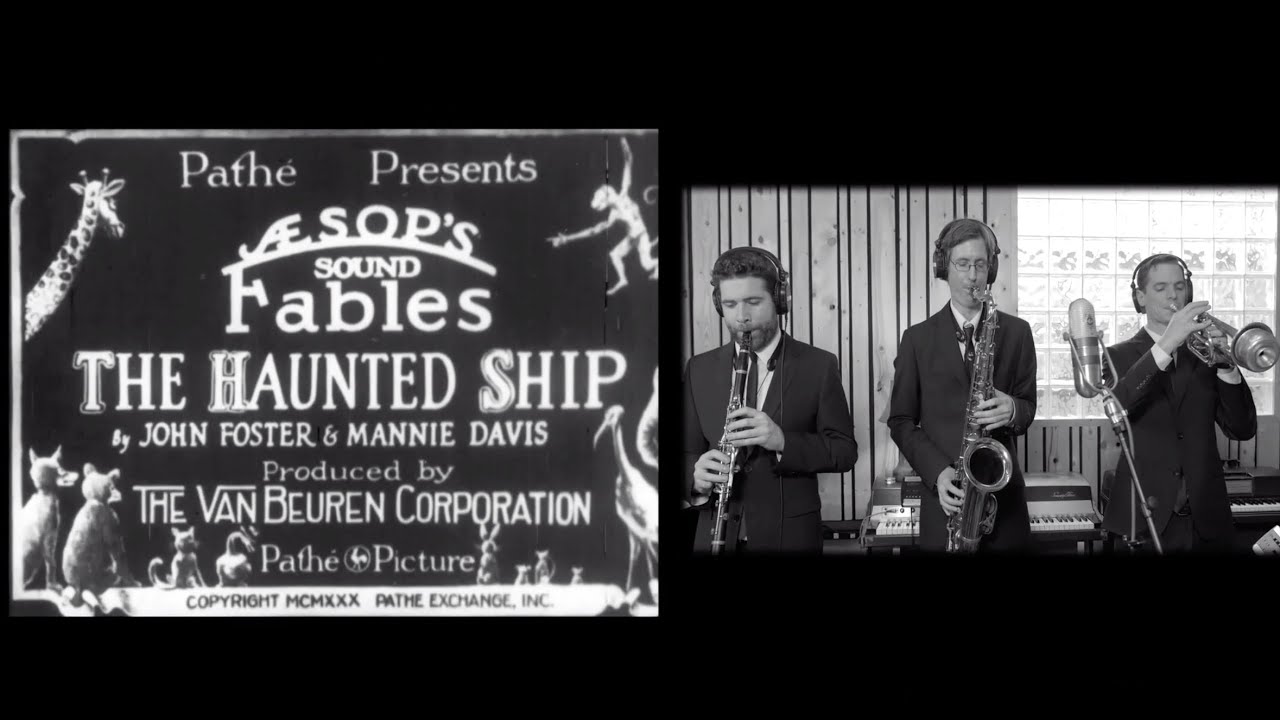
As I watched The Queen’s Cartoonists slip and slide through decades of cartoon music in a matter of minutes, with the animations projected on a large screen behind them, I followed a captivated crowd of young and old consciously connect what they were watching with what they were hearing. The pleasure of the perfect synchrony of sound and pictures was instantly recognizable.

“Part of the point was to get people to go out and see jazz,” Pierson says. But it’s also about showing the profound impact cartoon music has had on everything from film scores to modern animations. Everything, from SpongeBob SquarePants to Bojack Horseman, has roots that go back to the golden age of animation. So Pierson and his band travel the United States dressed like John Travolta and Samuel Jackson in Pulp Fiction, brewing up forgotten traditions with a mixture of merry melodies and prolific performances. They are on a mission to retrieve something from the past that seems to have been lost in our present – a sense of direction (should’ve turned left at Albuquerque!). 

The Queen’s Cartoonists is made up of six exceptional multi-instrumentalists. But don’t take my word for it – let Daniel Goldmark, a professor of music history and author of Tunes for ‘Toons: Music and the Hollywood Cartoon, tell you instead – “the kind of stuff The Queen’s Cartoonists are doing is really hard,” he says. “You have to be really good musicians to do this.”

There’s Rossen Nedelchev, the drummer in the band. He was the person that introduced me to the music of The Queen’s Cartoonists, transporting me back to the late 20th century in Bulgaria when Duck Dodgers in the 24½th Century zipped into my living room for the first time. Then there’s Larry Cook (bass), Drew Pitcher (tenor saxophone and flute), Mark Phillips (clarinet and a very old and rare curved soprano saxophone), Greg Hammontree (trumpet and foley magic), and, of course, Pierson (piano), the band leader, arranger, and composer.

“At the start, we just performed this cool swing music used in cartoons,” Pierson says. “Now the emphasis has changed to, ‘look at this cartoon and we’ll play the soundtrack.’ It’s become more visual.” While the projections are the most important aesthetic aspect of the show, Pierson admits they really try to put the looney in their tunes with each band member performing pretty complex circus numbers and tricks.

You’ve got Nedelchev’s lightsaber-inspired drum solo and Phillips’ “Sabre Dance“, where he impossibly plays a sax and a clarinet simultaneously. Pierson tends to make a cocktail (“shaken, not stirred”) while he plays the piano. Perhaps most impressively looney is Hammontree’s performance of the “William Tell Overture” which Pierson describes him doing while “balancing an apple on his head as he rides a clown bicycle and an audience member shoots nerf darts at him.”

The real alchemy of what The Queen’s Cartoonists do is that they entertain kids and adults by playing music and cartoons very few of us still appreciate today. Let’s be honest – jazz, just like classical music, is possibly not the most prevalent genre on our subway, road-trip, workout, and birthday playlists. Jazz, particularly contemporary jazz, with its emphasis on improvisation, is not exactly accessible to people of all ages. But older, stricter jazz, like Duke Ellington, breaks through and gets stuck in your head. That’s what Pierson wants to get out of every The Queen’s Cartoonists show – a connection with the audience, no matter where they are or how old they may be.

“Even the best jazz musicians today, like Chris Potter – I’d go see him and I’m like, ‘I’m a professional jazz musician, I’ve no idea what that was,’” says Pierson. But match the music with the cartoons – it just clicks. Literally – the ‘click track’ was developed during the earliest attempts to sync sound and pictures. The click track is a series of metronome beats, linked directly to the rhythm of the action onscreen, that the musicians follow to stay in sync. 

You can draw an even straighter line between contemporary cartoons and animated movies and the classic Warner Bros. productions. “The giants, like Pixar composer Michael Giacchino (Coco, Inside Out, The Incredibles), were all raised on those cartoons,” Goldmark says. Everything from Bojack Horseman to The Simpsons, which are basically animated sitcoms, have roots in the Silly Symphonies, Merrie Melodies, Looney Tunes, and Happy Harmonies cartoons – yes, those guys back then really had a thing for alliteration and one-upping one another. What the first cartoons introduced and current animations continue to experiment with is ways in which you can emote through sound. 

These are stories that are heartfelt, as in the case of Pixar, or satirical, as in the case of Bojack, that just happen to be animated. “They don’t hire cartoon composers – they hire really, really solid composers,” Goldmark says. For Pierson, this is another sign that we’re coming back full circle. But the audience is only slowly warming up to the genius that cartoon music carries – “it’s music for something that’s animated, it doesn’t have to be a second or third-class citizen in the composing world,” Goldmark says.

Carl Stalling, the Original Earworm Maker

It all comes back to one of the great Hollywood composers – Carl Stalling. Having worked with Disney at the start of his career in the 1920s, Stalling created the music for some of the most timeless and influential cartoons ever. Including The Skeleton Dance – the very first mini-musical, where the cartoon was animated according to the music score. At Disney, Stalling helped established the sound for what would come to be known as cartoon music. At Warner Bros., where as musical director he scored more than 600 Looney Tunes and Merrie Melodies cartoons, Stalling brought about a new form of music altogether, using a treasure trove of songs, past and present, to add layers of context, humor, and direction to the action on the screen. You can thank Stalling for composing music that was to become – for those of us that grew up watching cartoons – the first soundtrack of our lives.

Because what else would explain the bizarre phenomenon of a Bulgarian kid growing up in the 1990s whistling Rossini’s “The Barber of Seville” in one breath and then “Oh! Susanna” in another? And it’s not just me – it’s what got Goldmark interested in the history of cartoon music in the first place. “It all started when I was five and I wanted to learn to play piano so I can perform this particular piece of music,” Goldmark says. “In college, I found out that I learned that piece from cartoon music. When I realized that, I had an epiphany that it wasn’t just that piece, but lots of classical, pop, folk songs – you name it.”

Stalling’s musical genius stemmed from his ability to find songs in the vast music library belonging to Warner Bros., match them to the storyline, and compose them according to the action. The music was not intended as a background – it is a primary and bold narrator, of sorts, in every cartoon. Like in the 1949 Road Runner classic, Fast and Furryous, where a high-speed chase around a cloverleaf interchange is timed perfectly to the song “I’m Looking Over a Four Leaf Clover” – an intentional musical pun for those with a keen ear.

It’s reminiscent of a Quentin Tarantino movie, where music is quintessential to the story, framing, and aesthetic. In a 2016 Variety interview, his music supervisor, Mary Ramos said, “what makes Quentin standout is his bold use of music. Often times it is a main character in his movies.” In films like Kill Bill: Vol. 1., that means a very Stalling-esque approach in terms of leaning on archival music. But, whereas Stalling relied on the vast Warner Bros. archive, allowing him to manipulate the melody from the published music to match his compositions, the contemporary world faces all kinds of copyright hurdles when it comes to music clearance. And Stalling could juggle dozens of melodies with different pace, genre, and origin to orchestrate the narrative of a six-minute cartoon.

Let’s compare that to the six-minute opening of Baby Driver, which is synced perfectly to the song “Bellbottoms” by The Jon Spencer Blues Explosion. It’s a finished product adapted to match the onscreen action. But in Stalling’s time, you only had the ingredients because there were no recordings (remember, it’s the 1930s and 1940s) of the music he would use. “So, for example, Stalling would take a Raymond Scott song and mould it to any beat,” Goldmark says. “He could manipulate it to make it sound sad, happy, upbeat, downbeat, whatever he wanted – that’s the beauty of it.” 

Stalling would then record the music that Warner Bros. had the rights to with their 60-piece orchestra, scoring the cartoon out of order and in as many takes as it took to perfectly match it to the action. Then the composers and editors put the puzzle together. Not The Queen’s Cartoonists though – six musicians performing these complex, interchanging compositions in real time, as the cartoons play above their heads. And that’s just the performance. Pierson says he’s spent hundreds of hours in YouTube wormholes, public domain record vortices, speaking with musicologists (including Goldmark) to try and find cartoons and music that are not copyrighted and can be performed live. Pierson then works on the music – “that could mean directly transcribing it or finding another piece that could fit,” he says – and then arranging it.

That’s how Pierson worked out the Popeye and Bugs Bunny cartoons I saw performed. Popeye the Sailor meets Sinbad the Sailor and A Corny Concerto are both listed as public domain works, allowing The Queen’s Cartoonists to put their own spin on them. Pierson is particularly proud of their Popeye composition. “It’s mainly brand new arrangement,” he says. “Only 20% I recycled from an old Popeye chart, the rest I pulled from a new cartoon, and edited it all together.”

My Moon, Music, and Medleys

That’s the beauty of The Queen’s Cartoonists’ approach to cartoons and music – they are able to add yet another layer to the treasure trove that is cartoon music and make it work in the contemporary world. It’s also what distinguishes Pierson’s approach to the musical arrangement from earlier attempts to popularize Stalling’s work – like Bugs Bunny on Broadway and its sequel Bugs Bunny at the Symphony – which combine a live orchestra performing parts of the classical music score with large projections of Warner Bros. cartoons.

The shortcoming? It’s lower hanging fruit because it just regurgitates famous classical compositions used in cartoons. “It’s Rossini, it’s Wagner, it’s Brahms,” says Goldmark. “The orchestras know how to play that stuff.” The Queen’s Cartoonists take it a step further – and, as the band evolves, they are beginning to experiment with incorporating international and contemporary cartoons.

My Moon (see below for trailer) is the first time The Queen’s Cartoonists are premiering animated film – “which is super exciting,” Pierson says. My Moon is a beautifully animated eight-minute digital film, “a very colorful experience about the relationship between the Earth, Moon, and Sun,” Pierson explains. “We adapted the original score written by a German composer and the guys who did the film are super excited about us performing it live.”

With the addition of this contemporary animation, The Queen’s Cartoonists create an impressive audio and visual genealogy of cartoon music, linking the first experimentations nearly a century ago – when the ingenious art of timing cartoons according to a bar sheet of music was developed – to modern animation timings where synchronicity is a software issue. 

That’s All, Folk, Jazz, Classic, Pop

When I was in New York to interview The Queen’s Cartoonists, it seemed like I was bombarded by music everywhere I went – a swing band at the JFK AirTrain exit; soul on McDougal Street; gospel on a street corner; Frank Sinatra in a restaurant. Even the sound of the subway has a certain jazzy rhythm to its predetermined chaos. “Jazz is America’s great contribution to the arts,” Pierson says. “We just want to make people aware that it’s all around them – from cartoon music to the sound swings of everyday life.”

The problem for Pierson today is that music is not composed – it’s produced. Especially cartoon music – looking at you, ‘Baby Shark’ people. Back in the day, Warner Bros. could hire a 60-string band to score a Bogart picture and ask some of the musicians to then stay back and score a Bugs Bunny cartoon. “You can’t expect Netflix to be hiring orchestras to record things,” Pierson says. “Even Game of Thrones, big shows like that – it’s just a guy behind a computer.”

A copy of a bar sheet synching sound and picture for the first two scenes in the early ‘Merrie Melodies’ cartoon ‘Shuffle Off To Buffalo.’

AnimationResources.org

Does it frustrate him? Pierson shakes his head to say, “no,” but Nedelchev chimes in to say, “of course it does!” It’s because people can’t tell the difference between what’s real and what’s artificial nowadays – “when we play kids something from the 60s, they love it,” Nedelchev says.

“The sound isn’t perfect, the pitch isn’t perfect, it’s messy – but it’s real. They hear it organically.” And that’s what makes The Queen’s Cartoonists special – especially if you get to see them live. By going back to basics with cartoon music, they are bringing back an entire era from the depths of the dusty and forgotten. And they do it with a certain theatrical pizzazz that gets kids and adults totally hooked.

“What’s next?” I asked Pierson. “Carnegie Hall, here we come!” So, as it stands, that’s not all, folks because The Queen’s Cartoonists are just getting started. 

  • Story and videos by

    Nikolay Nikolov

  • Edited by

    Sam Haysom

  • Artwork by

    Bob Al-Greene

Read More

from Daily Trends Hunter https://ift.tt/2VlTqEY
via IFTTT