The Biggest Risk Every NFL Team Is Taking in 2019

0 of 32

    Ron Schwane/Associated Press

    One thing that makes the NFL such an intriguing league is that each of the 32 teams enters the regular season with unique goals. Yes, the stated goal for every franchise is to compete for a championship, but that isn’t realistic for every team every year.

    While the Los Angeles Rams do hope to compete for a title in 2019, the Cleveland Browns should focus on simply getting to the postseason for the second time this century. While the New England Patriots hope to get another title run out of Tom Brady, the Miami Dolphins should be happy to find out whether Josh Rosen is franchise-quarterback material.

    Another aspect that keeps the league interesting is the fact that these goals come with their own risks. This is the side of the coin that we’ll examine: choices that—should they backfire—could derail the team’s season, negatively affect its future or cause issues in the locker room and/or front office.

1 of 32

    Christian Petersen/Getty Images

    No. 1 overall pick Kyler Murray is likely to be the Week 1 starter for the Arizona Cardinals. Arizona drafted him because of his potential fit in Kliff Kingsbury’s offense and because of his unique skill set.

    For this marriage to work, the Cardinals must be all-in on Murray, and they have to tailor Kingsbury’s offense to fit him.

    But what if Murray isn’t ready to go in Week 1? Well, then Arizona will likely roll out former Green Bay Packers backup Brett Hundley or bring in a quarterback like Josh McCown or Mark Sanchez off the scrap heap.

    If that occurs, the Cardinals will be in a similar situation to the one they were in at the start of 2018, when Sam Bradford opened the season while Josh Rosen watched from the sideline.

2 of 32

    Kevin C. Cox/Getty Images

    While injuries were the biggest issue the Atlanta Falcons had in 2018, a lackluster pass rush did the team zero favors. First-round picks Vic Beasley Jr. (2015) and Takkarist McKinley (2017) lacked consistency, and the team produced a mere 37 sacks.

    In a division that features both Cam Newton and Drew Brees, 37 sacks is not enough.

    However, Atlanta did nothing to upgrade its pass rush aside from bringing back Adrian Clayborn. He did have 9.5 sacks two seasons ago, but six of them came in one game. He had just 2.5 sacks for the New England Patriots last season and just 7.5 in the two seasons prior to 2017.

    The Falcons may get more production out of the pass-rushers they have, but they’re taking a risk by expecting to do so.

3 of 32

    Butch Dill/Associated Press

    The Baltimore Ravens used a third-round draft pick on former Louisiana Tech pass-rusher Jaylon Ferguson. While the small-school prospect does appear to have the tools needed to develop into a legitimate NFL edge threat, he’s facing a sizable jump in competition.

    If Ferguson struggles to make a quick transition, the Ravens pass rush could take a step back. Baltimore parted with Za’Darius Smith and Terrell Suggs in the offseason and did little outside of drafting Ferguson to replace them.

    The pressure isn’t solely on Ferguson, of course. Players like Tim Williams and Tyus Bowser will also need to contribute. However, this is a sizeable risk for a team that plans to win with its running game and defense.

4 of 32

    Adrian Kraus/Associated Press

    The Buffalo Bills took steps to improve their receiving corps this offseason, adding Andre Roberts, Cole Beasley and John Brown. It still has the look and feel, however, of a group of complementary receivers without a true No. 1.

    Now, such receiving groups do often work—just look over at the rival Patriots for proof. However, the Bills want second-year quarterback Josh Allen to become a consistent passer and not just a scrambler who throws the occasional beauty of a deep ball.

    Zay Jones or Robert Foster could always emerge as Allen’s go-to receiver, but going into the season without an established No. 1 is a risk that could hinder Allen’s development.

5 of 32

    Chuck Burton/Associated Press

    The biggest risk to for the Carolina Panthers is quarterback Cam Newton’s surgically repaired shoulder.

    Newton was far from 100 percent down the stretch last season, and the Carolina passing attack suffered in a big way. If he isn’t back to 100 percent, the same thing may happen again. Newton is throwing a regulation-size football already, per Jourdan Rodrigue of the Charlotte Observer, but that’s no guarantee he’ll be ready by Week 1.

    As Andrew Luck proved a couple of seasons ago, recovery from shoulder surgery can be unpredictable.

    What makes this an even bigger risk for Carolina is that it doesn’t have a seasoned veteran on the roster as injury insurance. The Panthers have Taylor Heinicke and Kyle Allen, who started one game apiece last season, and rookie Will Grier.

6 of 32

    David Banks/Associated Press

    The Chicago Bears parted with kicker Robbie Gould following the 2015 season. That decision haunted the Bears several times in 2018, but none was worse than Cody Parkey’s 43-yard miss that resulted in a playoff loss to the Philadelphia Eagles.

    Gould, meanwhile, made all but one of his field-goal attempts for the San Francisco 49ers.

    Will the Bears finally find a late replacement for Gould in 2019? This is the big question. Chicago has Chris Blewitt, Elliott Fry and Eddy Pineiro on its roster and could bring all three into training camp, according to Patrick Finley of the Chicago Sun-Times.

    The Bears are gambling on a training-camp kicking competition, and it’s a risk that could carry over well into the regular season and beyond.

7 of 32

    John Minchillo/Associated Press

    If Cincinnati Bengals quarterback Andy Dalton doesn’t perform well in Zac Taylor’s offense, this could be his final season with the franchise. While he has two years remaining on his contract, there is no dead money, per Spotrac, meaning he can be released without compensation.

    Giving Dalton the opportunity to prove himself to Cincinnati’s new head coach is fair. However, it seems odd the Bengals didn’t bring in somebody to push Dalton in training camp and during the season. Cincinnati did spend a fourth-round pick on Ryan Finley, but he and Jeff Driskel are the “competition” Dalton will face for the starting job.

    If Dalton struggles to adapt to the new offense, it will be hard to justify benching him for Finley or Driskel. That wouldn’t be the case had Cincinnati pushed to acquire a quarterback like Teddy Bridgewater or even Josh Rosen.

    This will be a non-issue, of course, if Dalton doesn’t struggle. If he does, though, it will pull down the offense and put a damper on Taylor’s first season at the helm.

8 of 32

    Ron Schwane/Associated Press

    After winning seven games in 2018—great by their standards—the Cleveland Browns are going all-in on taking the next step. General manager John Dorsey traded for Odell Beckham Jr. and Olivier Vernon and also signed Sheldon Richardson and Kareem Hunt in the offseason.

    The risk is that Cleveland now has a plethora of big personalities—including Jarvis Landry and Baker Mayfield—and a first-year head coach in Freddie Kitchens who must try to corral them.

    If all goes well, the Browns could be a playoff contender. If it starts going south, however, this could be a disaster.

    “It has a chance to be a complete and utter dumpster fire,” Colin Cowherd said on The Herd. “… Odell didn’t want to go here … the owner is a control freak, John Dorsey is a control freak, Freddie Kitchens could be over his head.”

    Kitchens is already unhappy that Beckham has largely been absent from OTAs—and he’s just one high-profile player the first-time head coach will need to manage. If he struggles to maintain control, the Browns could indeed be in trouble.

9 of 32

    Ron Jenkins/Associated Press

    The Dallas Cowboys added Amari Cooper last season and Randall Cobb this offseason. They should have a more formidable passing attack than they had in years past. However, they’re still going to field an offense that is based around Ezekiel Elliott.

    There’s good reason for this, as Elliott is a two-time rushing champion and one of the best all-around backs in the league. But Dallas doesn’t have a sound backup plan in the event Elliott misses extended time—either because of injury or league discipline.

    According to Charles Robinson of Yahoo Sports, the NFL is “likely” to investigate Elliott’s latest off-field incident—an altercation with a Las Vegas security guard.

    The Cowboys do not have an established veteran running back behind Elliott and will rely instead on Darius Jackson and fourth-round selection Tony Pollard. If Elliott misses time, Dallas could be in trouble.

10 of 32

    David Zalubowski/Associated Press

    The Denver Broncos traded for quarterback Joe Flacco this offseason with the hopes that he can still perform at a playoff-caliber level. This is a risk because if Flacco flounders, it could derail the team’s season.

    Yes, the Broncos also used a second-round pick on Missouri quarterback Drew Lock—who may well be the future. However, Flacco seems to have zero interest in preparing Lock to take the starting job.

    “I’m trying to go out there and play the best football of my life,” Flacco said, per Scott Gleeson of USA Today. “As far as a time constraint and all of that stuff, I’m not worried about developing guys or any of that.”

    If Flacco doesn’t play at a high enough level to put the Broncos in playoff contention, they may be tempted to see what they have in Lock. However, the rookie’s development may also be stunted by Flacco’s lack of desire to mentor him.

11 of 32

    Carlos Osorio/Associated Press

    Detroit Lions head coach Matt Patricia isn’t on the hot seat, not after just one season. However, early struggles could land him there, as owner Martha Ford isn’t interested in fielding an average team.

    “I think Mrs. Ford is a very different owner than her husband and has a lot less patience and a lot less tolerance for mediocrity,” team president Rod Wood said, via Fox 17.

    The pressure will be on for Patricia’s squad to win, and that could lead to some decisions that aren’t in the best long-term interests of the franchise.

    Coaches under pressure often make silly decisions—just look at some of Hue Jackson’s 2018 decisions. As a result, Patricia may make some moves that are good in the short term—and for his own job security—but not for the development of the team’s future.

12 of 32

    Michael Conroy/Associated Press

    The Green Bay Packers offense wasn’t working with Mike McCarthy at the helm. It wasn’t creative, and it appeared to hinder and ever frustrate quarterback Aaron Rodgers. It was time for a change, but was Green Bay’s gamble on the relatively unknown Matt LaFleur the right one?

    LaFleur has been a part of some impressive offenses. He served as quarterbacks coach under Kyle Shanahan with the Falcons. He served as the Los Angeles Rams’ offensive coordinator for a season under Sean McVay.

    However, there’s no telling if LaFleur really is another offensive genius or if he was simply in the right place at the right time to ride the we-want-the-next-McVay frenzy of the past year.

    This is a massive risk because if it doesn’t work out, the result could be Rodgers wallowing in mediocrity for the last of his prime seasons.

13 of 32

    Michael Wyke/Associated Press

    The Houston Texans have two sack problems on their hands. One is an offensive line that allowed Deshaun Watson to be pressured far too often in 2018. The other is that Watson himself has a habit of taking unnecessary hits—not all of his 62 sacks last season can be blamed on the line.

    To “fix” the offensive line, Houston drafted Max Scharping and Tytus Howard. It didn’t bring in a premier free agent, and if the rookies aren’t ready to contribute, the line will be essentially the same as it was a year ago.

    Now, if Houston can convince Watson to practice better pocket awareness and support him with a strong running game, his sack total should decrease. However, betting on a pair of first-year players to improve the line is a sizeable gamble—especially considering Watson already has one major injury on his NFL resume.

14 of 32

    Darron Cummings/Associated Press

    The Indianapolis Colts secondary was merely average in 2018. It allowed 237.8 passing yards per game, 17th in the NFL. Yet Indianapolis did little to address the unit aside from re-signing Pierre Desir and using a second-round pick on Temple’s Rock Ya-Sin.

    So, will the secondary be any better in 2019? If Ya-Sin is ready to start opposite Desir, then perhaps. The rookie has such upside, but he’s also facing a big transition in competition.

    “Ya-Sin needs technique work across the board, but the ability to handle the duties of the position are all in place and waiting to be unlocked,” NFL.com’s Lance Zierlein wrote.

    If Ya-Sin proves to be a reliable starter, the Colts may be a formidable playoff opponent. If he doesn’t, though, Indianapolis may again struggle against premier passing attacks—a flaw that got it eliminated from the postseason.

15 of 32

    John Raoux/Associated Press

    The Jacksonville Jaguars signed Nick Foles to a four-year, $88 million contract this offseason. What if, however, Foles fails to be a significant upgrade over 2018 starter Blake Bortles?

    This may seem like a laughable premise considering how poorly Bortles played last season, but the risk is real. Foles has struggled mightily away from the Eagles before. He started 11 games for the St. Louis Rams in 2015 and posted a passer rating of just 69.0.

    Bortles posted a rating of 79.8 last season.

    The presence of former Eagles quarterbacks coach John DeFilippo as offensive coordinator should help in Foles’ transition. However, the fact remains that giving the keys to Foles is risky—even if it’s a risk that Bortles-weary fans are willing to accept.

16 of 32

    Ross D. Franklin/Associated Press

    The Kansas City Chiefs didn’t miss out on the Super Bowl because they kicked off in overtime of the AFC Championship Game. They missed out because their defense wasn’t a championship-caliber unit. It was just plain bad, in fact, allowing 405.5 yards per game, second-most in the league.

    While Kansas City did make some personnel changes this offseason—it replaced Eric Berry with Tyrann Mathieu and Justin Houston and Dee Ford with Frank Clark—the Chiefs are largely banking on the hiring of Steve Spagnuolo to improve their defense.

    Spagnuolo is going to oversee the change to a base 4-3 defense, which may better fit the team’s personnel but will also require a transition period. If the defense stumbles out of the gate and the Chiefs accrue some early losses, they could spend the remainder of 2019 chasing the Los Angeles Chargers in the AFC West.

17 of 32

    Gail Burton/Associated Press

    The Chargers have a legit No. 1 receiver in Keenan Allen. They’re gambling on 2017 first-round pick Mike Williams developing into a surefire No. 2 receiver—or even a 1A—this season. The gamble is underscored by the fact that L.A. allowed Tyrell Williams to depart in free agency.

    While Mike Williams did show flashes of greatness in 2018—he had 43 catches for 664 yards and 10 touchdowns—Ty Williams was nearly as productive. He caught 41 balls for 653 yards and five touchdowns.

    We’re certainly not suggesting Los Angeles kept the wrong Williams—Mike is on a rookie deal for at least two more seasons—but the passing attack could take a step back if he and No. 3 wideout Travis Benjamin cannot replace the lost production.

    This may seem like a minor risk, but for a team as complete on both sides of the ball as L.A., it is noteworthy.

18 of 32

    Rick Scuteri/Associated Press

    A team as chock-full of talent as the Rams should have little trouble surviving a few offseason departures. However, Los Angeles lost two big-time players in Ndamukong Suh and Rodger Saffold and has done little to replace them.

    Suh, who is a five-time Pro Bowler, helped prevent opposing offenses from keying on defensive centerpiece Aaron Donald. The end result was a career year for Donald, who amassed a ridiculous 20.5 sacks.

    Saffold is one of the league’s most underrated offensive linemen; he was named a second-team All-Pro in 2017. He opened holes in the running game and helped keep Jared Goff clean in the pocket. Center John Sullivan is also gone, which means Los Angeles will rely on two new starters on the offensive line.

    The risk of taking a step back in the trenches is real.

19 of 32

    Lynne Sladky/Associated Press

    The Dolphins traded for 2018 first-round pick Josh Rosen during the draft. They’ll likely give him an opportunity to be the long-term answer at quarterback.

    There’s a huge inherent risk with that strategy, though. What if Rosen plays just as poorly as he did in Arizona? What if he can’t even snatch the starting job from journeyman Ryan Fitzpatrick? What if Fitzpatrick then produces enough FitzMagic to deliver six, seven or even eight wins—but doesn’t play well enough to lead the Dolphins to the playoffs?

    Miami will then find itself back where it was at the beginning of the offseason: with a first-round quarterback who has an uncertain future and without a high enough draft pick to land one of the top quarterbacks in the next draft.

20 of 32

    Bruce Kluckhohn/Associated Press

    Statistically, quarterback Kirk Cousins played well in 2018. He completed 70.1 percent of his passes, threw for 4,298 yards and tossed 30 touchdowns with just 10 interceptions. However, he also had a habit of shrinking in the spotlight and went just 3-4 after the Minnesota Vikings’ Week 10 bye.

    Minnesota doesn’t have a whole lot of choice but to give Cousins a chance to improve in 2019—he has $58 million of fully guaranteed contract remaining, per Spotrac. Expecting Cousins to take a positive step is a risk, though.

    The Vikings do not have an experienced veteran backup on the roster. Sean Mannion brings the most experience, and he’s made just one start in his four-year career. If Cousins again struggles or gets injured, Minnesota’s playoff hopes will likely sink—unless it scrambles for the likes of Mark Sanchez and Brock Osweiler.

21 of 32

    Jeff Roberson/Associated Press

    Quarterback Tom Brady played at a championship level in 2018. The New England Patriots are betting he can do it again in 2019, but this is a sizeable gamble. Brady will be 42 in August, and there is no clear succession plan in place.

    Should Brady suffer an injury or a dramatic drop-off in play, New England will be forced to turn to Brian Hoyer, Danny Etling or rookie Jarrett Stidham. This isn’t to say one of them couldn’t perform well as a spot starter. However, if, say, Hoyer is forced to play the final eight games of the season, the Patriots can probably kiss their title hopes goodbye.

    Of course, this isn’t a new risk for the Patriots. They took the same one last season, and it paid off with a sixth Lombardi Trophy.

22 of 32

    Jonathan Bachman/Getty Images

    Alvin Kamara has been the star of the New Orleans Saints backfield for the last two seasons. However, he’s worked in tandem with bruising back Mark Ingram II, who is now in Baltimore. The Saints have already taken the risk of letting Ingram walk, and it’s a risk that will carry over into the regular season.

    Yes, Kamara played an every-down role during Ingram’s four-game suspension at the start of last season. However, Ingram still contributed 645 rushing yards, 21 receptions and seven touchdowns in his 12 appearances. Can the Saints get similar production out of Latavius Murray or Javorius Allen?

    Obviously, this remains to be seen.

    The bigger question is whether Kamara can be as dangerous without the hard inside running of Ingram to complement him. If he’s not, the New Orleans offense may not be as balanced and as effective as it was in 2018.

23 of 32

    Bill Kostroun/Associated Press

    Can the New York Giants be competitive this season? Sure. Are they likely to be playoff contenders? No. It’s more likely this is a transition season in which Eli Manning plays out his final year or rookie Daniel Jones takes over the quarterback job.

    Laying a foundation for the future is important. However, the Giants will run the risk of diminishing their future by again centering the offense around running back Saquon Barkley.

    Barkley is special. We saw that during his Offensive Rookie of the Year campaign. As he endures the wear and tear of the NFL, though, he could become less special with each passing season. He had 352 touches as a rookie, and a similar season would put him over 700 touches before his third year.

    The Giants are going to feed Barkley—that’s why they drafted him—but they have to find a balance between utilizing his talent and preserving him for a time when the team is ready to make a postseason run.

24 of 32

    Seth Wenig/Associated Press

    The New York Jets are in a situation similar to the one the rival Bills are in. They have a promising second-year quarterback—in the Jets’ case, Sam Darnold—whom they need to groom into being a franchise signal-caller.

    Like the Bills, the Jets are going to attempt to do this without a legitimate No. 1 receiver on the roster, which is risky. New York does have capable wideouts, such as Robby Anderson and Quincy Enunwa. Plus, the addition of Le’Veon Bell will help the passing game. However, Darnold could struggle to find a go-to target in clutch situations, which could exacerbate one of his biggest issues: turnovers.

    Darnold threw 15 interceptions and fumbled five times in his 13 games as a rookie. Without a receiver on the roster capable of regularly dominating one-on-one coverage, he could again force the ball into bad spots with regularity.

25 of 32

    D. Ross Cameron/Associated Press

    The Oakland Raiders sacked opposing quarterbacks just 13 times in 2018. Six individual players produced more sacks than the entire Raiders defense did last year, and five more tied it. Yet, the Raiders did little to address the pass rush aside from drafting Clemson’ Clelin Ferrell fourth overall.

    The Raiders didn’t sign a player like Justin Houston or Ezekiel Ansah in free agency. They didn’t trade for a player like Dee Ford or Emmanuel Ogbah. Oakland added Ferrell and fourth-round edge-rusher Maxx Crosby—and that’s pretty much it.

    Even if Ferrell and Crosby somehow increase the sack total by 20, the Raiders would still be a bottom-five team based on last year’s sack numbers. Being able to bring consistent pressure is more important than racking up sack numbers, of course—and Oakland may well be vastly improved in this area. However, going into the season with a pass-rushing unit that is still highly questionable is a sizable risk.

26 of 32

    Scott Taetsch/Getty Images

    Eagles quarterback Carson Wentz has finished each of the past two seasons on the sideline because of injuries. However, Philadelphia has overcome his absences with the presence of backup Nick Foles.

    The problem is that Foles is no longer a member of the Eagles. Philadelphia will instead rely on some combination of Nate Sudfeld, Cody Kessler and rookie fifth-round pick Clayton Thorson to back up Wentz. Kessler is the only one with starting experience.

    There’s no way the Eagles can feel as good about that plan as they did with Foles on the roster.

    Of course, if Wentz stays healthy all season, there won’t be any risk at quarterback. Given his recent injury history, though, fans will likely hold their collective breath every time he takes a hard hit or lands awkwardly.

27 of 32

    Keith Srakocic/Associated Press

    Getting rid of Antonio Brown may help the Pittsburgh Steelers’ chemistry in 2019. However, the trade was still a risk because it removed one of the most dangerous receivers in the league.

    Yes, JuJu Smith-Schuster appears capable of being a No. 1. He caught 111 passes for 1,426 yards and seven touchdowns in 2018. But he won’t be working opposite Brown and likely won’t face as much single coverage.

    The Steelers are also going to have to develop new on-field chemistry in the passing game. Second-year wideout James Washington is likely in store for a bigger role, while free-agent acquisition Donte Moncrief and rookie Diontae Johnson have been added to the mix.

    With Ben Roethlisberger under center, the passing attack should remain dangerous. However, it may no longer be the elite unit it was a year ago.

28 of 32

    Tony Avelar/Associated Press

    The San Francisco 49ers invested heavily in their defense this offseason. They traded a second-round pick for pass-rusher Dee Ford, drafted Ohio State’s Nick Bosa with the second overall selection and signed Kwon Alexander to a four-year, $54 million deal.

    If these moves pan out, the defense should be markedly improved. If these players cannot stay healthy, though, it won’t. This is a big risk based on the histories of Ford, Bosa and Alexander.

    Ford has played only two 16-games seasons in his five-year NFL career and missed 10 games in 2017. Alexander has missed 14 games over the past two seasons, and Bosa is already injured after he played just three games last season.

    Bosa has a Grade 1 hamstring strain, per Herbie Teope of NFL.com. That doesn’t mean he won’t be ready to go in time for training camp, of course, but it does raise some concerns.

    When you add in that safety Jimmie Ward is already out with a broken collarbone, the injury risk for San Francisco’s new-look defense looms large.

29 of 32

    Ted S. Warren/Associated Press

    The Seattle Seahawks had a young up-and-coming pass-rusher in Frank Clark, who amassed 13.0 sacks in 2018. However, they also had to pay quarterback Russell Wilson—who got a four-year, $140 million extension—which left little cap room for Clark.

    So Clark was traded to Kansas City, and Seattle is without its best edge-rusher from a year ago. The Seahawks drafted L.J. Collier in the first round and recently signed Ezekiel Ansah, but banking on those two to replace Clark is a risk.

    In a division that now features Jared Goff, Jimmy Garoppolo and Kyler Murray, the Seahawks are going to have to get after the quarterback without relying too much on the blitz. If they struggle to do so without Clark, then the decision to deal him will have backfired.

30 of 32

    Chris O’Meara/Associated Press

    Quarterback Jameis Winston will show improvement in new head coach Bruce Arians’ offense. That’s the hope for the Tampa Bay Buccaneers faithful. However, Tampa Bay is taking a risk by not supporting him with a strong rushing attack.

    Peyton Barber is a serviceable back, but he’s nothing special. Second-round pick Ronald Jones was a disaster as a rookie in 2018, producing just 44 yards on 23 carries. According to Winston, Jones is at least improving.

    He’s getting comfortable in this offense,” Winston said, per Greg Auman of The Athletic. “No one is breathing down his neck. He’s more relaxed and executing at a high level.”

    Can the Buccaneers field a high-end rushing attack with Barber and Jones leading the way? That’s the gamble Tampa Bay is taking.

31 of 32

    Mark Humphrey/Associated Press

    The Tennessee Titans’ season will hinge on quarterback Marcus Mariota’s ability to be at 100 percent. He had nerve issues last season, which affected his ability to stay on the field and Tennessee’s ability to maximize its passing attack.

    The Titans did add injury insurance in the form of former Dolphins starter Ryan Tannehill, but the risk of Mariota’s health extends beyond this season. Tennessee needs to determine if Mariota is the franchise quarterback, as he is in the final year of his rookie deal.

    If Mariota cannot stay healthy, it’s going to be difficult for head coach Mike Vrabel and the Titans front office to be sold on the Oregon product beyond this season.

32 of 32

    Stephen Brashear/Associated Press

    The Washington Redskins scooped up Ohio State quarterback Dwayne Haskins with the 15th overall pick in April’s draft. Washington is hoping Haskins can become the franchise’s full-time starter sooner than later, but does it have enough outside receiving talent?

    “[Can the receivers] win in those 3rd-and-3, 3rd-and-5, 3rd-and-6 situations where you know he’s going to get pressured—they’re going to have to beat man-to-man—can they beat man-to-man coverage?” ESPN’s Louis Riddick said on the John Keim Report. “Or is he going to be sitting there, holding the ball, going, ‘Nobody’s open,’ and then all of a sudden getting his head knocked off?”

    Josh Doctson was Washington’s leading wideout in 2018, and he finished with just 532 yards and two touchdowns. The Redskins also have Paul Richardson Jr. and rookie Terry McLaurin—a teammate of Haskins’ at Ohio State—but the wide receiver corps is underwhelming.

    Whether it’s Haskins or journeyman Case Keenum under center, the passing attack could struggle.

Read More

from Daily Trends Hunter http://bit.ly/2IfWzkS
via IFTTT

Trump visit highlights UK’s Brexit choices

LONDON — No leader, no majority, no clue what to do next. Welcome to Brexit Britain, Mr. President.

Donald Trump, having touched down in the U.K. this morning, finds a country at a crossroads, not only unsure which way to turn, but how to turn and if it will be able to.

For this president in particular — but, in truth, any U.S. president in this position — Britain’s problems are America’s opportunities.

From trade and security to China, Russia and Iran, the United States has clear expectations of its “special” ally — and greater leverage than ever before thanks to the position the U.K. has put itself in, halfway out of the EU but without a clear idea of how to extricate itself fully.

Ultimately, British officials admit, outside the EU the U.K. needs the U.S. more than ever before. “Look at what we’re doing,” said one Foreign Office official, “a lot of it is about keeping the special relationship alive.”

Previously, if the Americans complained about EU protectionism, Brussels could be blamed. No longer.

By leaving the protective walls of the EU’s single market, customs union and security networks, the choices already facing medium-sized economies like Britain’s in the 21st century are only brought into sharper focus.

How should the rise of China be handled? What type of economy can thrive outside a major trade bloc? What price free trade? Should the country prioritize prosperity or security?

Economically, an American trade deal is the single biggest prize available to Brexit Britain — other than a deal with the EU. Yet this comes with significant political costs, including further complicating the Irish border. Any trade deal involving increased access for U.S. food forces a decision on London: should it apply equally to Northern Ireland, thereby hardening the border with the Republic, or should different rules apply to different parts of the U.K.?

Britain’s membership of the EU had meant some American requests were off limits: with trade deals benefiting American farmers and health firms two obvious examples.

Previously, if the Americans complained about EU protectionism, Brussels could be blamed. No longer.

The U.S. ambassador to the U.K., Woody Johnson, gave a flavor of this in his interview with the BBC Sunday, telling Andrew Marr “the entire economy” should be opened up to American competition — farming and health care included.

But it’s not just food, farming and health care where the price for the special relationship will involve difficult tradeoffs.

Away from the pomp and pageantry of the state visit, the U.S. president has a list of serious requests for the outgoing British prime minister.

On Iran, the U.S. will press its ally to toe the hard line it has set against the regime in Tehran, which has been opposed by London, Paris and Berlin.

Even more pressingly, there’s China and its Huawei 5G network.

In his interview, Ambassador Johnson said the president would raise concerns about “the risk of allowing your infrastructure to be built by a country that has a totally different setup.”

In the great game of international affairs, the United States is locked in a battle for supremacy with China: on trade, security and defense. The European Union is attempting to create its own third pole of global power, with or without the U.K.

In his visit to the U.K. this week Trump is pressing Britain to choose its side. The U.K. has not yet made up its mind.

This insight is from POLITICO‘s Brexit Files newsletter, a daily afternoon digest of the best coverage and analysis of Britain’s decision to leave the EU available to Brexit Pro subscribers. Sign up here.

Read More

from Daily Trends Hunter http://bit.ly/2WkKeWG
via IFTTT

NBA Finals 2019: Raptors vs. Warriors TV Schedule, Odds and Game 3 Predictions

Andre Iguodala hit the clinching three-point shot for the Warriors in Game 2 against the Raptors.

Andre Iguodala hit the clinching three-point shot for the Warriors in Game 2 against the Raptors.Ted S. Warren/Associated Press

The Golden State Warriors did not play perfect basketball in Game 2 of the NBA Finals against the Toronto Raptors Sunday night, but they came awfully close during the first 5:30 of the third period.

That’s when the the two-time defending champions went on an 18-0 run that keyed their 109-104 triumph over the homestanding Raptors and tied the championship series at 1-1.

The Warriors trailed 59-54 at halftime and appeared to be on their way to falling into a 0-2 hole. However, they started the third quarter at full speed, and the Raptors were unable to come up with any answers. 

After building a 72-59 lead, the Warriors did just enough down the stretch to hold on for the win. Andre Iguodala hit the decisive three-point shot with 5.9 seconds remaining, and that basket blunted a 10-0 Toronto run that gave the Warriors a 109-104 victory.

Bleacher Report @BleacherReport

Andre Iguodala Game 2 dagger 🤫

Series tied at 1-1 https://t.co/b3sfvOPA1A

In addition to the winning points courtesy of Iguodala, Klay Thompson scored 25 points for the Warriors and Stephen Curry added 23 points.

Thompson was a key performer in the first half, and his effort kept the Raptors from building a more decisive lead. But he had to come out of the game in the fourth quarter after suffering what appeared to be a hamstring injury.

The victory demonstrated the Warriors’ ability to find a way to come up with a road win when they needed it.

“It was a great win. We got to go home and protect our home floor and we’ll see about all the injuries,” head coach Steve Kerr said, per the Associated Press (h/t ESPN.com). “But I’m very proud of our team and in particular all the guys off the bench.”

NBA Finals

Game 1: Raptors 118, Warriors 109

Game 2: Warriors 109, Raptors 104, Series tied, 1-1

Game 3: Toronto at Golden State, June 5, 9 p.m. ET

Game 4: Toronto at Golden State, June 7, 9 p.m. ET

Game 5: Golden State at Toronto, June 10, 9 p.m. ET

Game 6: Toronto at Golden State, June 13, 9 p.m. ET, if necessary

Game 7: Golden State at Toronto, June 16, 8 p.m. ET, if necessary

In addition to Thompson’s injury, which occurred when he landed in an awkward manner after attempting a three-point shot, backup center Kevon Looney suffered a chest injury, and Iguodala returned after falling hard in the first half.

Ben Golliver @BenGolliver

Warriors’ Game 2 ailments…
– Kevin Durant (leg)
– Stephen Curry (dehydration)
– Klay Thompson (hamstring)
– Andre Iguodala (leg)
– DeMarcus Cousins (leg)
– Kevon Looney (chest)

Those injuries may hinder the Warriors’ hopes of a third consecutive title. They still don’t have Kevin Durant back after suffering a calf injury in the second round against the Houston Rockets, and while there is talk he could be back in the series, there are no definitive plans for him to return for Game 3 Wednesday night.

Despite the numerous injuries, the Warriors are three-point favorites, per VegasInsider.com. The total in the game is listed at 227.

Thompson was seen limping after the game with ice on his hamstring. He told ESPN’s Rachel Nichols he plans on playing in Game 3, and the injury is not as severe as the high ankle sprain he had in last year’s championship series against the Cleveland Cavaliers. He did not miss a game in that series.

ESPN @espn

With ice on his left hamstring, Klay Thompson congratulates his teammates as they come off the floor with a win. https://t.co/KfA6U5jNYM

The Raptors know they missed an opportunity to take a 2-0 lead in the series as a result of their play at the start of the third quarter.

“Third quarter we didn’t play well enough. We missed too many shots,”  Raptors guard Kyle Lowry said, per Brian Mahoney of the Associated Press (h/t NBA.com). “They got out in transition and got a little confidence going. We lost the game there.”

If Thompson is able to play in Game 3 and Durant comes back at some point before the final game is played, it may be turn out to be the point where the Raptors lost the series.

Prediction

Thompson is a Warrior, both in terms of the team he plays for and the mindset he brings to his team on a nightly basis. If he has anything to say about it, he will play in Game 3 against the Raptors and will play effectively.

He has proved his mettle in championship situations time and time again, and there is no reason to think he will fall short here.

The same goes for Curry. He had reeled off six straight games with 30 points or more before Game 2, but the thought of him failing to reach that level at home is unlikely.

This is the last series the Warriors will play at Oracle Arena, as they will move to the Chase Center in San Francisco next season.

Every game in the NBA Finals at Oracle will be emotional, and the Warriors know how to win those games. Toronto had its opportunity to take control of the series, and they let Golden State wriggle free. 

The Warriors will win and cover in Game 3.

Read More

from Daily Trends Hunter http://bit.ly/2XmTzJP
via IFTTT

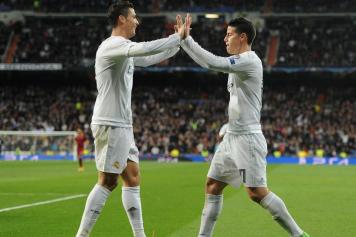
Report: Cristiano Ronaldo ‘wants’ James Rodriguez at Juve

02 June at 20:15

Napoli and Juventus both reportedly have interest in James Rodriguez. According  to German paper

Bild,

it seems like Juve star Cristiano Ronaldo is trying to convince the Colombian star to join him in Turin. Bayern Munich won’t likely buy him out permanently as his future is in doubt. James and Ronaldo reportedly had numerous Facetime discussions as the Portuguese would love him to join the bianconeri. More to come on the matter…

Read More

from Daily Trends Hunter http://bit.ly/2WB9xmA
via IFTTT

Trump lashes out at London mayor as he arrives for UK state visit

Minutes before landing in the capital of the United Kingdom, where he is due to be treated to full state honours as a guest of royalty, US President Donald Trump lashed out at the mayor of London, Sadiq Khan, branding him “a stone cold loser who should focus on crime in London, not me”.

The president, who is expected to enjoy a day of Britain’s pomp and pageantry on Monday, the first day of a three-day state visit, said Khan reminded him of liberal New York City mayor Bill de Blasio, “only half his height”.

The mayor of London, where thousands of protesters are expected to line the streets on Tuesday in a demonstration spearheaded by a giant blimp portraying the president as a baby in a diaper, had previously compared Trump’s use of divisive language to “the fascists of the 20th century”.

Writing in the UK’s Observer newspaper on Sunday, Khan said Britain “should not be rolling out the red carpet” for Trump, where a poll showed only 21 percent of the population had a positive opinion of him with 67 percent holding a negative view. Khan labelled the president “one of the most egregious examples of a global threat”.

In an interview published on Saturday, the president had told The Sun tabloid newspaper: “I think I am really – I hope – I am really loved in the UK. I certainly love the UK.”

….Kahn reminds me very much of our very dumb and incompetent Mayor of NYC, de Blasio, who has also done a terrible job – only half his height. In any event, I look forward to being a great friend to the United Kingdom, and am looking very much forward to my visit. Landing now!

— Donald J. Trump (@realDonaldTrump) June 3, 2019

State visits are usually occasions designed to honour a nation rather than an individual, but Trump’s arrival comes at a time of political chaos in the UK and his personal impact is likely to be unavoidable. He regularly breaks diplomatic norms, such as staying out of domestic politics.

Politics and Brexit 

In an interview published this weekend, he publicly endorsed Boris Johnson in the race to succeed Prime Minister Theresa May.

He will meet her on Tuesday amid a heated international dispute surrounding Washington’s trade war with China, and a controversial UK decision to award key 5G infrastructure contracts to Beijing tech giant Huawei.

The president also heralded his trip by weighing into the Brexit debacle, suggesting on Sunday that far-right eurosceptic Nigel Farage, who campaigned in the US for Trump’s 2016 election, should be a part of European Union withdrawal negotiations.

He also said the UK should refuse to pay its 39 billion pound ($49bn) European Union divorce bill if there is no Brexit deal with Brussels. 

“If they don’t get what they want, I would walk away,” Trump told the Sunday Times. “If you don’t get a fair deal, you walk away.”

US Ambassador to the UK Woody Johnson this weekend also said the National Health Service, much beloved in Britain, should be included in trade negotiations over a potential post-Brexit trade deal with the US.

Gun salutes in Green Park and at the Tower of London will greet President Trump on Monday, and he will inspect troops at Buckingham Palace before a private lunch with the queen. On Monday afternoon, Trump, who pulled the US out of the Paris climate change agreement, will meet Prince Charles, a passionate environmentalist.

In a 1996 radio interview, Trump made a series of lewd comments about Prince Charles’ former wife, Princess Diana.

On Monday night, President Trump will be the guest of honour at a state banquet at Buckingham Palace, though the event is being boycotted by opposition party leaders. Due to refurbishment work at the palace, the president will not be a houseguest at the royal home, but will stay at the residence of the US ambassador, a mansion on the edge of Regent’s Park. 

Read More

from Daily Trends Hunter http://bit.ly/2JVp1Mi
via IFTTT

Can Trump Still Sue His Way Out of Trouble?

To keep hidden the details of his long-clandestine finances, Donald Trump has been waging a legal war wildly unusual for a commander in chief. He and his allies and associated business entities have sued two big banks he did business with plus Trump’s own accounting firm as well as the Democratic chairman of the congressional oversight committee. So far, federal judges have rejected these lawsuits, and Trump’s attorneys have appealed to keep the cases going.

These tactics, testing the limits of the separation of powers that underpin the government of this country, have been called “outlandish” in Congress. To those, though, who have followed Trump’s career, they’re nothing if not predictable. For nearly half a century, Trump, 72, has used lawsuits as cudgels and prods and publicity stunts. He and his wingmen have used them, or threats of them, to harass, to deflect and delay, to punish opponents and protect his brand, his money, his image, himself. Even in the face of losses, he has used them to find a way to wins.

Story Continued Below

The difference now is that Trump’s legal arsenal includes not just an array of personal attorneys but the vast resources of the Department of Justice—which at times he has hoped would serve the same role as his most bare-knuckled advocates. He is fighting personal legal battles that have ramifications today and potentially well into the future for the nation’s most important public office. Apples-to-apples numbers on this front are hard to come by, according to experts on the presidency and the judiciary, but scholars are confident in stating that Trump (with the possible exception of Richard Nixon) is unique in this regard. “I know of no president who was so openly combative and willing to sue and be sued,” said presidential historian Robert Dallek, who is working on a book called How Did We Get Here: From TR to Donald Trump.

The people who have known him the longest are not surprised in the least. “He sues,” said Barbara Res, the Trump Tower construction manager and a former executive vice president of the Trump Organization. “That’s his M.O. He sues.”

“It’s just another tool in his war chest,” said Jack O’Donnell, the former president of the Trump Plaza casino in Atlantic City, New Jersey. “He uses it to wear people out, whether it’s financially or emotionally.”

“He’s used litigation historically to keep hostile forces at bay and to delay reckonings,” Trump biographer Tim O’Brien said. “He’s also used it to try to embarrass competitors, critics or opponents. And I think by and large he’s done that successfully. He’s the poster child for the abuses and inefficiencies of the American court system.”

But can it work in this new venue? “That,” O’Brien said, “is the question that’s being tested right now: Is Donald Trump, as president, above the law?”

***

He’s not above the law. He’s just using it like any other citizen can, and should. That’s the view, at least, of Alan Dershowitz, the Harvard Law professor emeritus and frequent Trump defender. And it might even serve a useful political function.

“Bringing lawsuits is a way of invoking the system of checks and balances,” Dershowitz said, “and presidents historically have brought lawsuits, have responded to lawsuits—it’s a way of bringing the judiciary into the system of checks and balances that are tripartite in nature.” He called “reasonable” litigation “a perfectly appropriate use of the system of checks and balances.”

If nothing else, Trump has had an abundance of practice. His exhaustive history of weaponizing the courts started in 1973, when DOJ sued Trump and his father for racist rental policies in their fiefdom of outer-borough apartment buildings. Trump responded by hiring Roy Cohn, the notorious judicial and political fixer who’s been called “pure evil,” “a legal executioner,” and “one of the most despicable people in American history.” Cohn and Trump sued the feds right back—for $100 million. “The countersuit was bullshit,” said Elyse Goldweber, one of the prosecutors involved. But it extended the timetable of the case and turned it into a public relations skirmish as much as a matter to be settled purely in court. Nearly two years later, Trump and his father signed a consent decree pledging to change their ways, “one of the most far-reaching ever negotiated,” as DOJ put it. Trump, unchastened, insisted it was a win—a precursor to one of his most telltale maneuvers. Furthermore, for the government, the aftermath was galling. With Cohn at the point, the Trumps for years dragged their feet, exasperating subsequent prosecutors and effectively defanging the enforcement of the decree. As a whole, it would prove to be a singular font of so much of what was to come.

“Trump claims he went to Wharton business school,” presidential historian Doug Brinkley said. “What he did was attend Roy Cohn University.”

“Everything Trump does is steeped in Roy Cohn’s mentoring and teaching,” Cohn cousin David Lloyd Marcus said. “Roy knew that you could threaten to litigate, and that often that was enough. But also Roy knew that you could tie up things in the courts for years. Years. This is all right from the Roy playbook.”

A voracious pupil of the ruthless attorney, Trump has sued or been sued at least 4,000 times, according to the yeoman’s work of reporters from USA Today. He has sued people over unpaid royalties in licensing deals. He has sued Miss Pennsylvania. He has sued Bill Maher. He has sued the creator of Jeopardy! and Wheel of Fortune. He has sued Scotland. He has sued New Jersey. He has sued New York City, and he has sued New York State. He has sued Palm Beach. He has sued an architecture critic from Chicago. He has sued the Secretary of the Interior and the National Indian Gaming Commission. He has sued people for using his surname in businesses … even though it was also their surname. He has sued and been sued by his first ex-wife. He has sued and been sued by Steve Wynn. He has sued and been sued by longtime business partners. “Just another lawsuit filed by Trump as a diversionary tactic,” a spokesman for one of those partners once said, “attempting to intimidate and to substitute publicity for substance.” He has threatened to file countless lawsuits he then hasn’t filed.

And legal documents show that when he has to give sworn answers, he is a grudging, hair-splitting deponent, performing his own versions of Bill Clinton-esque parsing. “Well, the word ‘developing,’” he once said in a deposition, “it doesn’t mean that we’re the developers.”

“I know lots about litigation,” Trump said in a speech at a get-together of the Nevada Republican Party in Las Vegas in 2011.

“Does anyone know more about litigation than Trump?” he asked at a campaign rally in January 2016. “I’m like a Ph.D. in litigation.”

“It’s a business for me,” he told Megyn Kelly that May, calling it a “tactic,” “and I have been successful—and I’ve, you know, used litigation, and sometimes I use it maybe when I shouldn’t, and sometimes I don’t.”

Last month’s lawsuit was not, for instance, the first time he sued Deutsche Bank. Back in 2008, he filed a suit against his most noted lender, attempting to wiggle his way out of $40 million of a construction loan he had personally guaranteed, worried he was staring at a catastrophe at the onset of the recession, taking the extraordinary legal position that the national real estate bust was an unforeseeable act of God, same as a tsunami or hurricane, that should void his obligations. It was, said one of the attorneys for the bank, “kind of crazy” and “kind of telling.”

“Every morning he wakes up and says, ‘Who can I sue?’” late public relations maestro John Scanlon once said.

“Anytime he thought someone was going to sue him,” Res said last week, “he would find a way to sue them first, because he wanted to be the plaintiff. He had this notion that if you were the plaintiff, you had a better chance of winning.”

There are, however, plenty of losses on Trump’s legal ledger.

He lost to the NFL. He lost to Marvin Roffman. He lost to Vera Coking of Atlantic City. And he lost to O’Brien, the biographer, whom he sued for reporting that Trump wasn’t worth what he said he was worth.

“He lost,” O’Brien stated bluntly. “Because the weight of everything was on our side. He routinely says publicly that he cost me a lot of money. He knows that’s not true. I didn’t pay a dime for any of that litigation. The New York Times’ lawyers were free to me, and my book publishers paid for outside counsel. And he knows he didn’t win that case. And he knows the results of choosing to litigate were far, far more damaging for him than for me.”

But O’Brien cautioned onlookers at this stage about reading too much into how that went down.

“That’s the exception, actually, in the long history of his litigation,” he said. “Most of the time he’s gotten the results he’s wanted.”

***

What was it that he wanted? To intimidate. To pay less. To save face by distancing himself from faltering projects. To fuel publicity. To buy time. To win in the longer run. For now, the Trump administration’s “win rate” in the federal courts is abysmal. The two recent suits he filed to block subpoenas for his records were summarily shot down, both judges ruling with unusual speed and dismissiveness. In these cases, if Trump was trying to delay, if he was trying to intimidate, it didn’t work. “It is simply not fathomable that a Constitution that grants Congress the power to remove a president for reasons including criminal behavior would deny Congress the power to investigate him for unlawful conduct,” one of the judges wrote, adding that Trump’s legal arguments had “fundamental” problems. At this, though, Dershowitz shrugged. “What’s important,” he said, “is what the courts ultimately decide, not how many lower courts go against him.”

“Contemporary presidents end up in court a lot, mostly regarding their interpretation of regulatory statutes,” said Texas A&M professor George C. Edwards III, the editor of Presidential Studies Quarterly. “Trump is unusual in his blanket resistance to accommodating congressional investigations, which leads to numerous lawsuits.”

“This is another case where President Trump’s behavior is norm-busting,” added Russell Riley, a presidential historian at the Miller Center at the University of Virginia.

Trump has never had to grapple with this high a degree of scrutiny and interference. He also and equally notably has never had more power, and one of the primary ways in which he’s already a president of great consequence is that he has markedly altered the ideological makeup of the federal judiciary—up to and including, of course, the Supreme Court. And this is what people who know him the best think about when they think about Trump in his role as litigator in chief.

“I think he expects that the judges he appoints will help him one day,” said Michael D’Antonio, a Trump biographer and a CNN analyst.

“I think he believes that every suit he’s involved in will go to the Supreme Court and he will win,” Res said.

“Because he’s got the deck stacked,” O’Donnell said.

“I think,” O’Brien said, “unless institutions, particularly the law enforcement community and Congress, stand up for the rule of law, Trump is going to do an end-run around people.”

“I think all he wants to do is get to November 2020,” said Carl Tobias, a law professor at the University of Richmond and an expert on the federal judiciary, “and he’ll be able to drag it out in the courts if he wants to.”

And it all traces back to the beginning. “He is using what he knows how to do best,” said veteran New York-based Democratic strategist Hank Sheinkopf, who’s been watching Trump for decades, “his knowledge of how to use the legal process and lawyers to stop his opponents from injuring him. And it’s worked. So why shouldn’t it work here?”

Read More

from Daily Trends Hunter http://bit.ly/2QFDKLK
via IFTTT

Goals of the Week June 2

  1. Fernandez Bicycle Kick Brings the Fire 😏

    Major League Soccer @MLS

    Brian Fernández with a 🔥🔥🔥 finish to bring @TimbersFC within one. #PORvLAFC https://t.co/mCfqgQGkvM

  2. 😍

    Major League Soccer @MLS

    Even better in slo-mo. 👌 #PORvLAFC https://t.co/e9i0Rx3W63

  3. MLS Highlights 🎥

    via Bleacher Report

  4. FIFA U-20 World Cup Highlights 🎥

    via Bleacher Report

  5. Vidéo Foot @VidoFoot1

    https://t.co/QXe24UvWJB

  6. Vidéo Foot @VidoFoot1

    https://t.co/RL1kzGfolr

  7. Major League Soccer @MLS

  8. Major League Soccer @MLS

  9. Major League Soccer @MLS

  10. Josef Martinez Needs No Help

    Major League Soccer @MLS

    Just @JosefMartinez17 doing what he does best. 👌 #UniteAndConquer https://t.co/YLIAZAd9zG

Read More

from Daily Trends Hunter http://bit.ly/2HQ5FG1
via IFTTT

Kushner: Palestinians not yet capable of governing themselves

White House Senior Adviser Jared Kushner has said that the Palestinians deserve “self-determination,” but stopped short of backing Palestinian statehood, expressing uncertainty over their ability to govern themselves.

Kushner, who is President Donald Trump‘s son-in-law, made the comments in a television interview with the Axios on HBO programmes, broadcast on Sunday.

Asked whether he believed the Palestinians were capable of governing themselves without Israeli interference, Kushner said: “That’s one that we’ll have to see. The hope is that they, over time, will become capable of governing”.

The Palestinians, he said, “need to have a fair judicial system … freedom of press, freedom of expression, tolerance for all religions” before the Palestinian areas can become “investable”.

One of the architects of the United States‘s yet-to-be-released Middle East peace plan, Kushner said it would be a “high bar” when asked if the Palestinians could expect freedom from Israeli military and government interference.

The Palestinian leadership has boycotted the diplomatic effort that Trump has hailed as the “deal of the century”. Although Kushner has been drafting the plan for two years under a veil of secrecy, it is seen by Palestinian and some Arab officials as tilting heavily in Israel‘s favour and denying the Palestinians a state of their own.

In Sunday’s interview Kushner again avoided saying explicitly whether the plan would include a two-state solution, the bedrock of US policy for decades.

“I do think they should have self-determination. I’m going to leave the details until we come out with the actual plan,” Kushner said.

Last month, Kushner indicated that the US would be pulling back from its long-standing support of the two-state solution.

“If you say ‘two-state’, it means one thing to the Israelis, it means one thing to the Palestinians,” he told the Washington Institute for Near East Policy. 

“We said, you know, let’s just not say it. Let’s just say, let’s work on the details of what this means”.

Part of the plan is expected to be unveiled at a US-sponsored investment conference in Bahrain this month. 

The Palestinian Authority has said it will not attend the event. 

‘Not here to be trusted’

US officials have been vague about the timing for releasing proposals for resolving the political issues of the Israeli-Palestinian conflict, but experts are sceptical of the Trump administration’s chances for success.

The Palestinian leadership has refused to deal with the Trump administration since late 2017 when Trump decided to move the US embassy from Tel Aviv to Jerusalem and recognised Jerusalem as the capital of Israel. 

The Palestinians demand Jerusalem‘s eastern sector as the capital of their long-promised state, while Israel insists that the whole city is its “eternal, indivisible capital”. 

With Israel heading for new elections in September after Prime Minister Benjamin Netanyahu failed to form a government, uncertainty is expected to further delay the plan’s rollout.

The Kushner interview took place before the latest Israeli political developments.  

When asked whether he understood why the Palestinians might not trust him, Kushner said “I’m not here to be trusted” and that “there’s a difference between the Palestinian leadership and the Palestinian people.”

He said he believed the Palestinian people would judge the plan based on whether “they think this will allow them to have a pathway to a better life or not.” 

Secretary of State Mike Pompeo delivered his assessment of the plan’s prospects in a closed-door meeting with Jewish leaders last week, saying: “One might argue” that it is “unexecutable” and it might not “gain traction,” according to an audio recording, the Washington Post reported on Sunday.

Pompeo did express hope, however, that the deal was not simply dismissed out of hand, the Post reported.

“We’re doing out best to help the Middle East to get a peace plan,” Trump told reporters when asked about the Pompeo recording. “I understand why [Pompeo] said that. Most people would say it can’t be done. I think it can be done”. 

Read More

from Daily Trends Hunter http://bit.ly/2MoMs2A
via IFTTT

‘Strength in Numbers’ Defining Golden State Warriors’ Run at History

TORONTO, CANADA - JUNE 2: Shaun Livingston #34 and DeMarcus Cousins #0 of the Golden State Warriors high five after Game Two of the NBA Finals against the Toronto Raptors on June 2, 2019 at Scotiabank Arena in Toronto, Ontario, Canada. NOTE TO USER: User expressly acknowledges and agrees that, by downloading and/or using this photograph, user is consenting to the terms and conditions of the Getty Images License Agreement. Mandatory Copyright Notice: Copyright 2019 NBAE (Photo by Jesse D. Garrabrant/NBAE via Getty Images)

Jesse D. Garrabrant/Getty Images

Already without Kevin Durant, the two-time defending NBA champion Golden State Warriors lost Klay Thompson to a hamstring injury in the second half of Sunday night’s Game 2. It didn’t help that Stephen Curry “just didn’t feel right,” too.

But even with the health deck stacked against them, the “Strength in Numbers” Warriors held on, beating the Toronto Raptors 109-104 to even the 2019 NBA Finals at one game apiece and further their chances at completing a three-peat that would give them a historic four titles in five years.

95.7 The Game @957thegame

Stephen Curry on Strength In Numbers motto:

“It isn’t something you just throw out there to have nice shirts & give out to the crowd at Oracle & have all this marketing stuff. It’s literally how we approach every day from training camp to June.” #Warriors https://t.co/yocj58dW1P

Timely contributions from all over the roster gave this victory the feel of one from the pre-Durant Warriors.

  • Draymond Green: 17 points, 10 rebounds, nine assists
  • DeMarcus Cousins: 11 points, 10 rebounds, six assists
  • Andre Iguodala: eight points, eight rebounds, six assists
  • Quinn Cook: nine points, including back-to-back threes in the second half
  • Andrew Bogut: six points in seven minutes

“When Kevin’s out there, we all have the luxury of just saying, ‘OK, that set didn’t work, we still got this guy to just throw a ball into it and get out of the way,’” Green told ESPN’s Nick Friedell before Game 2. “That luxury isn’t there anymore.”

And now, it’s not just Durant. As detailed by Ben Golliver of the Washington Post, Golden State’s injury report is getting pretty substantial:

Ben Golliver @BenGolliver

Warriors’ Game 2 ailments…
– Kevin Durant (leg)
– Stephen Curry (dehydration)
– Klay Thompson (hamstring)
– Andre Iguodala (leg)
– DeMarcus Cousins (leg)
– Kevon Looney (chest)

At the start of this dynasty, the Warriors looked as fresh and unstoppable as Keanu Reeves in the first half of the first John Wick. Now, they’re like the beat-up, back-against-the-wall Wick we see in Chapter 3

As the Raptors found in Sunday’s Game 2, it’s tough to bury the NBA’s boogeymen. Even when they’re hobbled. Like Wick randomly finding the strength (and equipment) he needs to move forward, the Warriors get random contributions from lesser names at just the right moments.

Cousins, who made his first start since tearing his quad in the first round of this postseason, was critical in tying the series. And the points weren’t really his biggest contribution.

In the fourth quarter, both teams’ offenses completely bogged down. From the 5:39 mark of the final frame until just seven seconds remained, the Warriors were stuck at 106 points. Cousins had three boards in that stretch, and his defense helped hold the Raptors at bay.

StatMuse @statmuse

Boogie made his presence known Game 2 of the #NBAFinals with 11 points, 10 rebounds and 6 assists – all three of which are new playoff career-highs given his limited postseason experience. #GSWvsTOR #StrengthInNumbers

📊 https://t.co/WNtk4y3TmS https://t.co/VpOcbOfaMA

Iguodala did his part, too. The 2015 Finals MVP has had his fair share of huge plays for the Warriors over the years, and his defense has always been reliable in the postseason.

In Game 2, after the Raptors slowly crawled to within two points during that tough offensive stretch for Golden State, Iguodala struck again:

NBA on TNT @NBAonTNT

IGGY sealed Game 2 for Golden State! 👌💦

#NBAFinals https://t.co/lREHDZUGJd

“That’s kind of disrespectful to leave a guy like Andre Iguodala open like that,” Curry said in a postgame interview with ESPN’s Doris Burke. “He’s made big shots like that before.”

And, of course, there’s Draymond.

After going for 17, 10 and nine in 41 minutes during Game 2, Green is now averaging 13.6 points, 10.4 rebounds and 8.2 assists per 36 minutes since the game in which Durant went down with an injured calf against the Houston Rockets.

“I think we play our best when we’re threatened,” Green told NBATV‘s Grant Hill after the game. “You know, when a team poses a threat, I’ve never seen us fold.”

Green is a major reason that’s true, especially lately. With Durant out of the lineup, Green has been on the ball for significantly more possessions. And he’s consistently pushing the pace, helping remind people how this team played in the first couple years of this dynasty.

Depth was a staple of those teams, as well. And on Sunday, Bogut, Livingston and Cook all made big plays.

Bogut converted three alley-oops in the second half. Cook drilled back-to-back threes to stymie a mini-run by the Raptors. And Shaun Livingston made perhaps the play of the night by merely catching a pass.

Right before Iguodala hit the game-sealing three, Curry threw a pass that looked as good as stolen by Kawhi Leonard. Livingston sealed Kawhi off for the catch before assisting on the Iguodala three.

“We all got a joke amongst us of bad receivers and good receivers,” Green told reporters after the game. “I always call Kevin a bad receiver. I always call Shaun a bad receiver. He turned into Megatron tonight for that pass. It was big for us.”

TORONTO, CANADA - JUNE 2: Draymond Green #23 of the Golden State Warriors shares a laugh during interview after the game against the Toronto Raptors during Game Two of the NBA Finals on June 2, 2019 at Scotiabank Arena in Toronto, Ontario, Canada. NOTE TO

NBA Photos/Getty Images

Now, as the series shifts back to Oakland for Game 3, the Golden State Wicks will need everyone at the ready again. With OG Anunoby activated for Game 2, the Raptors have an entirely clean bill of basketball health. No one is on the injury report.

Golden State’s injury report is longer than some shopping lists.

According to Yahoo’s Chris Haynes, Thompson expects to play in Game 3, but he’s also getting an MRI for his hamstring. Even if he’s in the lineup, he may not be at 100 percent.

Maybe the huge shots on Wednesday will come from Jonas Jerebko or Alfonzo McKinnie. Maybe Sunday’s heroes will step up again.

If they don’t, the Raptors will have a good shot at reclaiming home-court advantage. As pointed out by Bleacher Report’s Adam Fromal, this Toronto team has the best score in simple rating system (point differential plus strength of schedule) of any Finals opponent the Warriors have faced during this run.

Wick had Laurence Fishburne, Halle Berry, Ian McShane and The Continental. Against a team as good as the Raptors, the Warriors will need more than Curry and Durant to complete the three-peat.

Read More

from Daily Trends Hunter http://bit.ly/2JTgkSJ
via IFTTT

Pompeo questions reception of US plan ‘loved only by Israelis’

The top diplomat of the United States has reportedly called the US administration’s long-awaited Israel-Palestine peace plan arguably “unexecutable”, in comments delivered just weeks before a Washington-led economic conference in Bahrain, where the first part of the initiative is due to be unveiled.

The Washington Post reported on Sunday it had obtained an audio recording of Mike Pompeo in which the US secretary of state told Jewish leaders that the still-secret plan might not “gain traction” and critics might reject it as not “particularly original”.

Speaking in a closed-door meeting on Tuesday of the Conference of Presidents of Major American Jewish Organizations, Pompeo reportedly said: “I get why people think this is going to be a deal that only the Israelis could love.

“I understand the perception of that. I hope everyone will just give the space to listen and let it settle in a little bit.”

Speaking to Al Jazeera, John Hudson, the Washington Post’s national security reporter who obtained the audio recording, said it appeared that Pompeo was trying to manage expectations.

“This is a big climbdown from the initial rhetoric of the ‘ultimate deal’,” Hudson said from Washington, DC, adding that Pompeo was “very much acknowledging that this could definitely not pan out”.

Since Trump announced plans for the peace proposal, which he has entrusted to his son-in-law Jared Kushner and former lawyer Jason Greenblatt, the US has taken a number of steps that have been vehemently denounced by the Palestinians, including unilaterally recognising Jerusalem as Israel’s capital without a final-status agreement and move the US embassy there from Tel Aviv.

It has also curtailed aid to the Palestinian Authority (PA), shuttered the Palestine Liberation Organization (PLO) delegation in Washington and cut off finance to UNRWA, the United Nations agency supporting Palestinian refugees. Trump also endorsed Israel’s sovereignty over the Israeli-occupied Golan Heights, again reversing decades of US policy.

The moves led the PA, which governs the occupied West Bank, to cut off relations with the US last year, accusing it of having a thoroughly biased relationship with Israel.

US’s Middle East peace plan: What effect will Kushner have? (4:37)

‘Dead on arrival’

The Palestinian leadership, which has criticised the peace proposal, was not consulted about the upcoming conference in Manama, which is not expected to address the core political issues of the conflict: final borders, the status of Jerusalem, or the fate of Palestinian refugees.

The PLO, meanwhile has dismissed the Kushner effort as an attempt to bribe Palestinians into accepting Israeli occupation of the West Bank, a prelude to Israel annexing about half their territory and leaving them with scattered cantons.

PLO official Hanan Ashrawi wrote on Twitter that the Kushner plan and the Bahrain conference in late June were just “a handout to make our captivity palatable”.

Hamas, which administers the besieged Gaza Strip, has also rejected the US peace plan.

Palestinian businesspeople have opposed the Bahrain gathering despite a plea by Washington to attend, saying their political demands must be addressed in any peace plan.

Qatar said economic prosperity cannot be achieved without political solutions acceptable to Palestinians,. while Oman said anything that precludes the establishment of a Palestinian state would not be acceptable.

Although Kushner has been drafting the plan for two years under a veil of secrecy, it is seen by Palestinian and some Arab officials as tilting heavily in Israel’s favour and denying them a state of their own.

Jeffrey Stacey, a geopolitical analyst and a former US State Department official, said he believed the White House plan was doomed to fail, while also expressing his surprise at how candid Pompeo was in his comments.

“It’s remarkably revealing, it’s almost shocking, that he, as the chief diplomat of the United States of America, would let that slip – even in a private meeting, he should be a little more aware,” he told Al Jazeera from Washington, DC.

Stacey said the initiative was “not going to get anywhere”, adding that it was “absolutely being received with the coldest of responses”.

“It’s dead on arrival and Pompeo is actually, to our surprise, revealing that his own personal opinion on this is that it’s not going to go very far at all.”

Analysis: Trump breaking international law with Golan Heights decree (5:44)

Kushner speaks out

Still, in a TV interview that was aired on Sunday, Kushner appeared to express optimism about the proposal.

In an interview with the HBO programme Axios, Kushner was asked why Palestinians should trust the Trump administration.

“The actions we’ve taken were because America’s aid is not an entitlement,” said Kushner, who is also widely distrusted by the Palestinians for his family ties with Israeli Prime Minister Benjamin Netanyahu.

“If we make certain decisions, which we’re allowed to as a sovereign nation to respect the rights of another sovereign nation and we get criticised by that government, the response of this presidency is not, ‘so let me give you more aid. So that was as a result of decisions made by the Palestinian leadership.”

“Asked whether he understood why the Palestinians might not trust him, Kushner said, “I’m not here to be trusted”, adding that he believed the Palestinian people would judge the plan based on whether “they think this will allow them to have a pathway to a better life or not”.

Kushner said the Palestinians deserve “self-determination”, but stopped short of backing Palestinian statehood and expressed uncertainty over their ability to govern themselves. He said it would be a “high bar” when asked if the Palestinians could expect freedom from Israeli military and government interference.

Kushner again avoided saying explicitly whether the plan would include a two-state solution, the bedrock of US policy for decades, calling for a Palestinian state in the West Bank and Gaza Strip, with its capital in East Jerusalem.

But he said: “I do think they should have self-determination. I’m going to leave the details until we come out with the actual plan.”

Read More

from Daily Trends Hunter http://bit.ly/2QIg6yq
via IFTTT