Instagram is doing some more shuffling, and this time it’ll affect your profile page.
The social media platform is testing new features throughout November and December, including vaguely announced changes to icons and buttons, and navigation between tabs.
In a blog post, Instagram said the grid displaying your photos and videos won’t change at all, but the icons above the grid could be changing to words (grid, posts, IGTV, tagged).
Your profile picture could move to the right corner, pushing your username, in larger font, to the top of the page. It appears your followers and following will take less precedence than before, and the number of posts you’ve made will no longer be present.
A side-by-side “Follow” and “Message” button could be tested on profile pages, with even more options for business pages, including “Start Order.”
“We’ve been working on these changes and will test them in phases and different combinations with our community over the next several weeks,” the post reads. “We’ll continue to experiment and update the experience as we learn from your feedback.”
It’s one of the more mild updates Instagram has rolled out over over the last few months, since Instagram co-founders Kevin Systrom and Mike Krieger stepped down in September, and Facebook’s former News Feed chief, Adam Mosseri, has took over as VP of Product.
The platform is also finally doing something to crack down on fake likes and followers, moving to remove follows, likes, and comments from shady third-party apps, and using machine learning to tackle bullying on its platform.
This past summer, Samsung thought it would be a good idea to break folks’ TVs in the United Kingdom. It wasn’t real, of course – it was an attempt to show off a core feature of its 2018 lineup: Ambient Mode.
It spiked some interest in the feature, leading people to wonder – what does it actually do, exactly?
I was wondering the same thing, so I paid a visit to Samsung’s loft in NYC – a full showroom meant to resemble a real apartment, right in the Meatpacking District. The cozy loft came complete with appliances and other niceties, including QLED TVs.
I was shown a demo of a 65-inch QLED TV with Ambient Mode. This feature is Samsung’s answer to transforming a television into an organic part of your living space instead of just sitting there taking up space.
The company realized that you can still show something on a TV when it’s not in use, and that’s where Ambient Mode comes in. It allows the TV to blend in with the environment – in this case, a brick wall. Once that’s set, you can overlay different effects on top of it. It certainly is a neat feature and feels futuristic, but I’m not quite sure it’s a necessity.
For one, keeping the screen on would use more energy, even if it is a minimal amount. Samsung did inform me that, on average, using Ambient Mode will only increase the electric bill by about a dollar a month, though.
The reason this is surprisingly low is thanks to two energy-centric features. The first is a set of ambient light sensors that will adjust the screen’s brightness. If it gets dark for about 30 minutes, the TV will automatically shut down.
Secondly, the QLED TVs connect to your iPhone or Android device through Bluetooth, if you have the SmartThings app installed. From there it will detect if you are in the room, and if you’re too far away, it will turn the screen off automatically. Granted, you do have to give the app extra permission, like background refresh, on iOS or Android.
There are a variety of settings to choose from.
Image: Jake Krol/mashable
Both of these energy settings can be customized to your liking via this application. They’re tucked away in the settings panel, though, so hopefully Samsung makes it obvious that users do have choices.
And there’s no reason to worry about any cameras spying on you with these features. In fact, this app for iOS and Android is your primary control for the TV. You can customize the theme, cast content to it, and also use traditional TV controls.
Setting up Ambient Mode
Setting up Ambient Mode is done via photo.
Image: Jake krol/mashable
Ambient Mode’s neat trick is accomplished through the SmartThings app. You might recall making a mobile deposit for a check. This is a similar process. You hold your smartphone up to the TV as if you’re taking a photo and line it up into the square.
From there, the photo will be taken and then scanned. You’ll see it appear on the TV in front of you. After the first intake, you’ll hold your smartphone up again as it adjusts brightness and colors in real time. This is the finishing touch that makes the TV blend into the environment.
After this, you can choose from several screen overlays like a mountain range, a visual forecast, and even news updates. Samsung will regularly introduce new content for Ambient Mode through free software updates.
Is it believable?
I will admit I was skeptical of the feature going in, but seeing Ambient Mode in person really conveys what Samsung is trying for. No, a blank black TV screen doesn’t bother me, but this mode enhances it in a way that adds style and purpose.
From a technological standpoint, it’s impressive that it can do the intake of the environment in real time and looks incredible. This is all due to Samsung’s QLED technology, which allows for vibrant colors, better brightness, and dark blacks.
The process itself is speedy, and you get a lot of customization over the appearance and the settings behind it. If you’re an energy-conscious person, you can turn it off or set a timer. And if you don’t want the TV to be in communication with the Samsung app on your phone, you can turn that off as well.
Ambient Mode certainly lets you get more out of your TV, but time will tell if this interesting augment becomes a standard feature in the future.
LeBron James and the Lakers visit the Cavaliers on ESPN. Entering today, LeBron averages 31.5 PPG in Cleveland as an opponent, his highest scoring average at any road venue in his career.
It’s also the highest average in Cleveland by any visitor with at least three appearances. https://t.co/RLs1TQU5wx
Clock Iconabout 1 hour ago
Ohm Youngmisuk @NotoriousOHM
Rajon Rondo refuses to let his broken right hand hold him back. Here he is throwing left-handed passes to Michael Beasley during warmups with his right hand tucked away. https://t.co/WFfArQ76Pf
Clock Iconabout 1 hour ago
Bleacher Report @BleacherReport
Fans really doing this for Bron’s return to Cleveland…
LeBron James and the Lakers visit the Cavaliers on ESPN. Entering today, LeBron averages 31.5 PPG in Cleveland as an opponent, his highest scoring average at any road venue in his career.
It’s also the highest average in Cleveland by any visitor with at least three appearances. https://t.co/RLs1TQU5wx
Clock Iconabout 1 hour ago
Ohm Youngmisuk @NotoriousOHM
Rajon Rondo refuses to let his broken right hand hold him back. Here he is throwing left-handed passes to Michael Beasley during warmups with his right hand tucked away. https://t.co/WFfArQ76Pf
Clock Iconabout 1 hour ago
Bleacher Report @BleacherReport
Fans really doing this for Bron’s return to Cleveland…
Yangon, Myanmar – Adjusting her hijab and looking around the class, Dr Thet Htwe starts the day’s lesson with a simple question.
“Who wants to know about the human sexual response?”
Everyone raises their hand, some sheepishly giggling.
In a country where there’s still a debate over the proper word to use for “vagina” and simply talking about sex is considered taboo, Dr Thet Htwe is breaking down barriers.
The 35-year-old Muslim woman is one of the country’s leading teachers of sexual education, travelling around the country to provide classes lasting from one day to one week on subjects from arousal to menstruation, and sexual orientation.
A family doctor by training, Thet Htwe has been teaching sexual education under her organisation, Strong Flowers, since 2016.
In Myanmar, like many countries in Southeast Asia, sex education is not something that’s taught at school so Dr Thet Htwe teaches people of all ages – from teenagers to people in their 60s – and is often hired by companies to run classes for their staff.
Dr Thet Htwe stands on the balcony of the Strong Flowers centre in Yangon [Victoria Milko/Al Jazeera]
“Many young women learn about these things from their aunties or mothers,” said Thet Htwe. “A lot of times these things are not talked about at all. But then even when these topics are discussed, there is a lot of misinformation.”
‘Silent emergency’
The classes also have another role – discussing consent, women’s rights, and tackling sensitive topics including gender-based violence.
According to the United Nations Population Fund, violence against women is a “silent emergency” in Myanmar, characterised by a high level of social acceptance of such abuse and a legal system that fails to create an environment where women are protected.
A common proverb in the country translates to: “If you beat your wife until her bones are broken, she will love you more.”
An estimated 17 percent of married women between the ages of 15 and 49 experienced physical and/or sexual violence from their partner, according to 2017 data from the Ministry of Health and Sport, and the International Coaches Federation, a US-based non-profit.
But experts say the actual number is likely to be much higher because women don’t understand their rights or are afraid to report abuse for fear of the stigma.
“In our society many women do not know that they can say ‘no’,” said Suu May, a 22-year-old woman who took Dr Thet Htwe’s class in 2016. “Not only in relationships, but also with family or in the workplace. Taking this class taught me about consent, and helped me learn to respect myself.”
Dr Thet Htwe said her classes are starting to attract a new type of student as well.
“It used to be almost always just women attending, but there is definitely an increase in the amount of men coming now,” she told Al Jazeera.
‘Eye opening’
While Thet Htwe admits some of the men attending the classes are required to do so by their employers, she’s also noticed an increase in the number of young people who sign up for the class by choice, seeking a safe space in which to discuss sensitive issues.
“For me, it was eye opening and a great learning experience,” said Min Joor, 17, who attended a course on sexual harassment. “I was surprised learning about sexual harassment, because what I knew was different from what we were taught elsewhere.”
Min Joor said when he finished the class he began treating women differently, thinking about the lessons he had learned from Dr Thet Htwe.
“I was the sort of a boy who teased girls a lot, but after the training I tried to be more cautious about it,” he said. “I changed my behaviour, for sure.”
Strong Flowers material on the wall at the Women Open Spaces office in Yangon where Dr Thet Htwe runs her classes [Victoria Milko/Al Jazeera]
In a country as predominantly Buddhist as Myanmar, Dr Thet Hwe has also become something of an ambassador for religious understanding.
The United Nations has said the country’s military carried out mass killings and gang rapes of the Rohingya minority with “genocidal intent”, and Myanmar’s Muslims have often been the target of abuse and discrimination.
‘Part of the change’
Dr Thet Htwe acknowledges being a hijab-wearing Muslim woman also ends up playing an educational role in classes.
“There are a lot of challenges in this world – and in Myanmar there are a lot of challenges for women as well,” she said. “I would say for Muslim women, the challenges are double.
“When people provide course feedback they often tell me, ‘When we saw you we thought you would say something controversial about culture or religion. But the whole training period we noticed you were similar to us. We noticed you have no major differences from us.’”
While Dr Thet Htwe admits long-lasting societal change will take time, she said her classes do help build understanding between people.
“If from 20 people in a class one person changes or feels they’ve gained something, it’s a positive impact for the entire community,” she said. “But I will continue to so whatever it is I can to spread knowledge and be the part of the change needed in this society. This is my determination.”
However, Fultz’s agent, Raymond Brothers, told ESPN’s Adrian Wojnarowski: “I have given no indication to Elton Brand or anyone else that Markelle would prefer to be traded. My focus is to get Markelle healthy. End of story.”
Weiss, Bodner and Amick noted Fultz continues to deal with a lingering right shoulder injury and that the more recent wrist problem “has adversely affected his ability to shoot.”
Fultz has appeared in 19 games this season, shooting 41.9 percent from the field and 28.6 percent from three-point range.
Fultz is away from the Sixers as he prepares to have a specialist look at his shoulder next week. The Athletic’sDavid Aldridgereported the move was “at the direction of his attorney.”
Comments from Sixers general manager Elton Brand indicated the team wasn’t entirely on the same page with Fultz prior to his abrupt departure.
Jon Johnson @jonjohnsonwip
Brand on timing of Fultz seeking outside opinion after being benched last night:”Whatever Markelle wants, his timing, it is what it is.”
Jon Johnson @jonjohnsonwip
Brand asked by @NBASarah if there was any indication from Fultz that there was anything wrong with shoulder leading up in, and/or during season: “Something that kept him medically off court, no.”
Yaron Weitzman @YaronWeitzman
Elton Brand is being clear that the organization is supportive of Fultz, but he was clearly surprised by the call he got from Fultz’s agent this morning
While Fultz doesn’t appear to have made an explicit trade demand, his departure from Philadelphiamight be inevitableat this point.
He didn’t play in the second half of Monday’s 119-114 win over the Phoenix Suns, with T.J. McConnell taking over as the backup point guard. After the game, Sixers head coach Brett Brown wasnoncommittalabout whether Fultz or McConnell would back up Ben Simmons going forward.
The Sixers clearly had playoff ambitions before Jimmy Butler arrived, but that trade accelerated the team’s timeline. Even though Fultz’s development remains a priority, Brown is probably more concerned with using his best lineups possible. And that means inserting the more dependable McConnell into the rotation over Fultz.
Getting a clean break from the Sixers would also allow Fultz to potentially move on from whatever problems he’s experiencing in Philadelphia.
This is the kind of deal that you don’t have to think twice about — especially if you’re a gamer. (Not a gamer? This is your chance to get a great stocking stuffer for the gamer in your life at nearly $23 off.)
Walmart just slashed the price of Call of Duty: Black Ops 4 for both PlayStation 4 and Xbox One ahead of Black Friday, bringing the already discounted price down to just $37. This exclusive deal is only at Walmart and it’ll only be live for 24 hours (or until it sells out, we suppose) so get on it while you can.
“Call of Duty: Black Ops 4 is a monumental shift for a series that rarely changes. It’s not another Modern Warfare moment for Activision — this new game is more follower than leader — but, in typical Call of Duty fashion, it excels at what it does. This one just takes a chance on doing things differently.”
Snag it for PlayStation 4 here and for Xbox One here. Better yet, get a few and gift these to everyone on your list. Who said holiday shopping needed to be hard? Not us, that’s for sure.
My partner’s arms are longer than mine, so, on election day this year, I made him take the #IVoted selfie.
Now, I’m not one for selfies, usually. But I decided to share my act of civic participation on social media earlier this month for two reasons. First, because I was genuinely jazzed to vote. It was my first time doing so in person! It was exciting! And second, I’d just learned that posting photos with sticker proof of your buy-in to the democratic system is actually an impactful way to encourage others to vote.
On Tuesday, Snapchat shared that 1.4 million users visited their Get to the Polls platform, a voting information portal powered by the tech-focused nonprofit organization Democracy Works. Snapchat also registered over 400,000 new voters in the weeks leading up to the election — and over half of those voters were aged 18-24, also known as the coveted but fickle youth vote. Twitter, Instagram, and Facbook ran similar initiatives, though they have yet to release participation numbers.
The midterms also appear to have been a landmark year for voter turnout. With 49.3 percent of the population eligible to vote casting their ballots this year, the 2018 midterms had the highest non-presidential election turnout since 1914. In particular, Tufts University’s Center for Information and Research on Civic Learning and Engagement, (CIRCLE) projects that youth in particular increased their midterm turnout by 10 percent — up to 31 percent of eligible voters aged 18-29, from 21 percent in 2014.
With voting stories, stickers, and resources peppering social media platforms, and youth voters heading to the polls in record numbers, it’s tempting to draw a conclusion about the role social media may have played in getting to the polls. And while social media is a fact of all parts of life – including politics — and is now an indispensable resource for reaching voters, tracing the line from social media to the voting booth may be trickier than it seems.
today was my first time voting in person! had only ever voted by mail before. last night, bf and i sat down, talked candidates and provisions, and filled out our sample ballots. then went in to vote this morning, where we ran into a neighbor. gotta say, it was thrilling! #IVotedpic.twitter.com/sO7QUJknwN
Though voter rolls won’t be released until next spring, with Snapchat’s report, voter turnout, and industry analysis, a picture is beginning to emerge of the role that social media played in fueling civic engagement.
It may be too soon to definitively know whether social media contributed to the turnout spike; in particular, it’s difficult to ascribe definitive causation, specifically to social media, for voter turnout. However, CIRCLE’s preliminary findings in their research on social media and youth voting in the 2018 midterms indicate that social media helped reach, inform, and energize young voters.
“Our analysis clearly shows that social media platforms reached a very large segment of young people, many of whom were potential first-time voters, and that youth benefited from hearing about the election on their social media feeds,” CIRCLE explained in a blog post. “It is likely that intentional efforts by social media companies to promote non-partisan voter engagement in 2018 likely had a positive effect on youth voter turnout, especially for those youth who lacked election information and outreach from other sources.”
Image: CIRCLE
Snapchat partnered with Democracy Works to reach potential voters in a couple ways. It prominently linked to the organization’s TurboVote platform to register voters and allow them to sign up for future election information. Snapchat also drove users to the Get to the Polls portal on Election Day, to learn about their polling place, how to cast a ballot, the hours, and other logistical information – which CIRCLE says can be a barrier to voting if people feel they don’t understand how it works.
Around 3.5 million people used Get to the Polls, twice as many as last year. Democracy Works’ TurboVote program director, Mike Ward, added that Snapchat was one of the biggest drivers to the portal, netting 1.4 million visits, 40 percent of the total.
Still, it’s too early to know whether visiting Get to the Polls meant that people actually turned out to vote. But Ward believes that higher voter turnout and higher use of the platform are not meaningless numbers.
“Get to the Polls got more traffic in a midterm than it did in the presidential, which is exceptional,” Ward said. “We can’t track whether this percentage of users actually turned out to the polls, but the results of the election is a strong indication that this has been successful.”
CIRCLE’s findings back this up as well. Of surveyed voters, 28 percent said they heard about the 2018 elections through social media campaigns.
Along with research from groups like CIRCLE, Democracy Works and Snapchat may be able to track use of the portal with election turnout when the government releases voter rolls in the spring.
However, Chris Doten, who is the chief innovation officer of nonprofit democratic advocacy organization National Democratic Institute’s (NDI), said matching use of a social media platforms to voting behavior might not be so simple.
“The science on this stuff is hard to get right,” Doten said. “When you’re trying to do analyses of get out the vote tactics, it’s really hard to tease out a determination of what matters.”
Social media is clearly playing a role, but it’s part of a much larger and more difficult to quantify ecosystem of voter engagement.
Rock the Vote’s director of policy and civic tech, Jen Tolentino, believes social media campaigns have been instrumental in reaching and energizing voters. In Rock the Vote’s own work, mobilizing influencers on social media to inspire their followers to vote has been especially important. And she sees providing the sort of logistical information that Snapchat did as an effective way to help people get to the polls.
“It’s a really impactful way for users to get information without having to seek it out,” Tolentino said. “Surfacing it to them, telling them within their newsfeed, that they have an election and it’s something to be celebrated, I think it is incredibly impactful.”
However, she only sees social media campaigns as one side of the story. Social media may have helped enable participation in the midterms, but a now impassioned and energized youth demographic, reinvigorated ultimately by issues they care about — not social media prodding — was the first necessity for turnout.
“It’s really not enough to just tell people, you have an election, go vote,” Tolentino said. “The ones that did are much more motivated by the issues that they’re seeing, and making the connection between what they care about as a generation to how they can have an impact on their countries and communities is what’s making the difference.”
“When enthusiasm is very high, there are a lot of ways in,” Dotan added. “But would that person have found their way in otherwise? Many access points is great. But that’s not to say they get ‘credit’ for every single person who voted.”
Social media companies who undertake get out the vote campaigns are not necessarily seeking “credit.” At this point, people concerned with elections are still trying to understand how to best reach and motivate potential voters, and social media campaigns are assisting with that.
But in some ways, registration and logistical information is the least these companies can do. Social media is becoming a pipeline for voting and civic engagement and that may be a boon for registration, but it also comes with its own pitfalls.
“There is a risk of young people who are turning to social media as primary sources of civic knowledge being exposed to political misinformation and disinformation, which many of these platforms are still struggling to combat,” CIRCLE noted.
Dotan added that get out the vote campaigns stand in somewhat ironic contrast to the damage that social media platforms have done to democracy.
“There’s a strong argument that social platforms have done a lot in the widespread dissemination of disinformation that has poisoned democracy in various ways,” Dotan said. “So it’s good if they put up an ‘I Voted’ frame. But what else are they doing?”
Many of these platforms, notably Facebook, have been taking strides to root out the democracy-eroding problems of their own creation — though many of the changes only came after harsh public and political backlash. The registration and voting drives, along with the I Voted stickers, selfies, and the many ways that voting became a part of life online in 2018, are a proactive compliment to that work.
“In addition to all the metrics, there’s a real impact that can be made by changing the culture around voting,” Ward said. “Snapchat is making voting more fun. And when voting is more fun, more people do it. We can’t measure how they’re making it more fun, but they are.”
Social-media based Get Out the Vote campaigns won’t turn our democracy around themselves. But they can ease the runway, particularly for young voters, as they head to the polls, perhaps for the first time, and hopefully, not for the last.
In a Wednesday talk with reporters, Baltimore Ravens offensive guard Marshal Yanda emphatically denied spitting on Cincinnati Bengals linebacker Vontaze Burfict in his team’s 24-21 win on Sunday.
“The sequence in question occurred in the fourth quarter after Burfict tackled Baltimore running back Alex Collins and a minor scuffle ensued involving several players. Video from the CBS broadcast of the game shows spit coming from Yanda’s mouth while Burfict was on the ground after the play, and Burfict had no apparent reaction.”
Yanda made the following comment on Wednesday, per Hensley:
“The video, some people are taking it crazy, but all I was doing was wiping the spit off my helmet, away from the ground. I swiped at it to make sure that it didn’t land on anybody. I don’t know if you guys know, during the course of a game, I’m like a heavy spitter. The adrenaline is fired up, and I’m spitting all the time—sidelines, on the field, but not on anyone ever. … That would never be anything that would ever even be fathomed in my mind. That’s not the player I am.“
Thisarticle will be updated to provide more information soon.
Get the best sports content from the web and social in the new B/R app. Get the app and get the game.
Tijuana, Mexico – Miriam* reported the death threats to the Honduran police. Twice. And she took her nephew to the medical examiner after gang members attacked him.
“I was taking care of one of my nephews and the gang wanted me to hand him over. They wanted to recruit him,” Miriam says.
“I refused, and that is when they wanted to harm us. You don’t refuse them anything they ask, because they will kill you. I went to file reports with the police and it was useless,” she tells Al Jazeera.
The Honduran police did nothing and a representative from the governmental human rights commission told her the family should flee for safety, Miriam says. She called her sister, who came home immediately. The sisters, Miriam’s husband, her three children and 14-year-old nephew all left La Ceiba on the same day in September.
Her sister and nephew fled their home in northern Honduras to Europe and Mariam and her family fled to Mexico.
Their first stop was in Tapachula, where Mariam’s family applied for humanitarian visas. When a caravan of several thousand migrants and refugees, who undertook a collective month-long journey north through Guatemala and Mexico, passed through the city, they wanted to join but decided to stay behind in order to ensure they would receive the visas.
But this week, 30-year-old Mariam and her family caught up with the collective exodus in Tijuana where they are now staying until they can apply for asylum.
The wait could be weeks, however, as the Trump administration continues to try to put restrictions on the group and the thousands more that follow behind.
Rights groups challenge asylum rules
Earlier this month, President Donald Trump declared that asylum claims would only be processed if those making them crossed into the US at official ports of entry.
A district court in California struck down the measure on Monday, issuing a temporary injunction to put an immediate halt to its implementation pending a December 19 hearing.
The lawsuit that may impact Miriam and her family the most, however, is a complaint challenging former Attorney General Jeff Sessions’s June guidance, which makes it harder for individuals fleeing gang violence and domestic abuse to apply asylum.
The lawsuit was filed by the American Civil Liberties Union and the Center for Gender & Refugee Studies in August. Court proceedings are ongoing.
In this file photo taken on November 1, 2018 migrants and refugees heading to the US, walk along the road from La Ventosa to Matias Romero, Oaxaca State, Mexico [Guillermo Arias/AFP]
Along with poverty and unemployment, violence is the most common factor driving the exodus.
Mariam continues to hold copies of the medical examiner’s report and the papers she filed with police to show why her family fled. Al Jazeera has interviewed several other individuals and families fleeing gang violence in Honduras and El Salvador.
The Trump administration says the new rules are needed to protect the US and its border. On Tuesday, Kirstjen Nielsen, the Department of Homeland Security secretary, said, without providing evidence, that the the US had identified hundreds of criminals, including known gang members, travelling with the caravan.
Expanded military powers
In Tijuana, however, migrants and refugees are more concerned about the potentially armed and dangerous forces north of the border.
Separately on Tuesday, White House Chief of Staff John Kelly reportedly signed a memo authorising military personnel to perform activities deemed “reasonably necessary” to protect US border agents, including “a show or use of force (including lethal force, where necessary), crowd control, temporary detention, and cursory search”.
“I now have the authority to do more,” Department of Defense Secretary Jim Mattis told reporters on Wednesday.
“If I change the mission then something like that could happen,” he said, adding there is not intention to do so now but that the situation depends on directives from Nielsen.
United States Marines fortify concertina wire along the San Ysidro Port of Entry border crossing as seen from Tijuana [Adrees Latif/Reuters]
More than 5,000 active duty troops are deployed in border areas. Military officials declared they will be home in time for the December holidays, but Mattis is not ruling out an extension or new missions, he said.
Around that same time, the Central American migrants and refugees will likely only be beginning to cross from Mexico into the United States. US officials have drastically limited the number of asylum claims processed per day at ports of entry this year, and there is a long waiting list at the San Ysidro crossing in Tijuana.
Miriam and her family put their names down on the waiting list as soon as they arrived in Tijuana last week. She was told to return in three weeks to check and see if their numbers would be coming up soon, but several asylum seekers who arrived before the Central American exodus told Al Jazeera they had already been waiting for three to four weeks and their numbers were still a ways off.
Miriam is not concerned. She and her family waited more than six weeks in Tapachula before receiving their humanitarian visas, and they are prepared to wait their turn to continue north and request asylum in the US, where she and her husband both have relatives. Still, it is not the future they had ever envisioned, she says.
“We had never dreamed of leaving Honduras,” she says. “We were forced to make the decision.”
*Al Jazeera has changed the individual’s name to protect her identity at her request.


 : ESPN
  @cleveland19news)
 @AmericanExpress)
  : #LakeShow x #BeTheFight
 : 8:00pm/et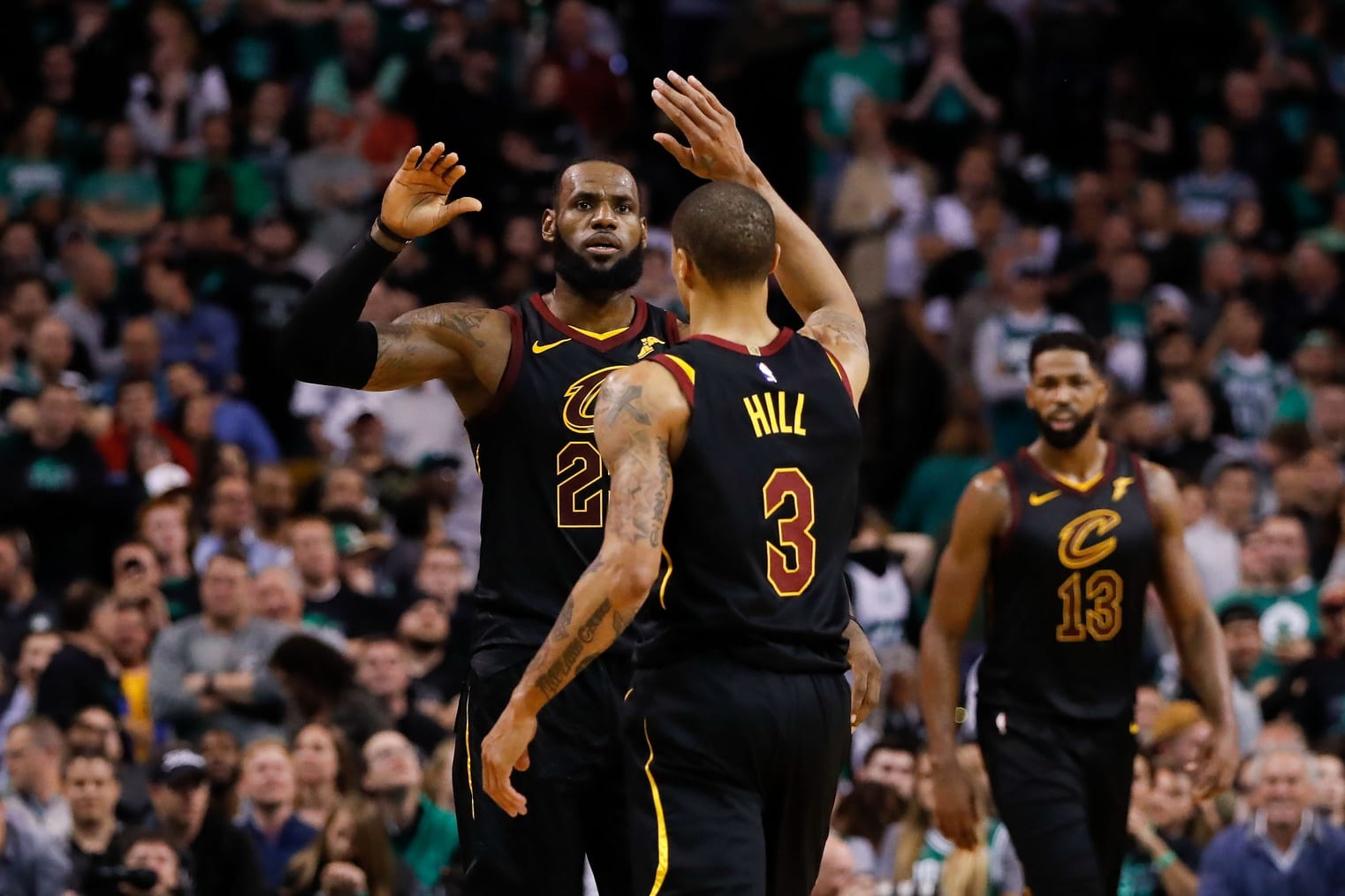



/https%3A%2F%2Fblueprint-api-production.s3.amazonaws.com%2Fuploads%2Fcard%2Fimage%2F887274%2F202c39b5-eb53-4d9a-b32d-0a20f29f07db.jpg)


 Daily Trends Hunter